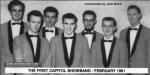
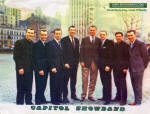
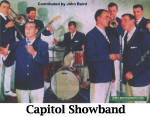
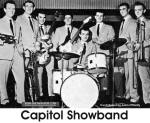
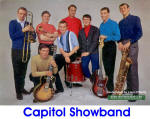
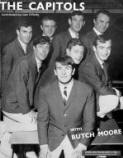
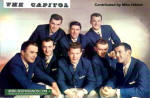
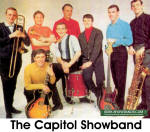
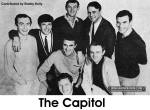
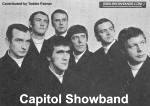
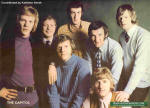
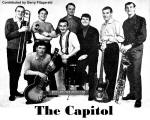
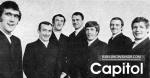
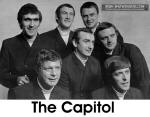
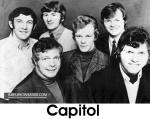
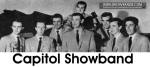
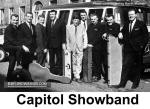
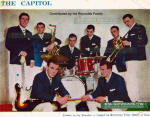
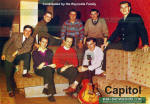
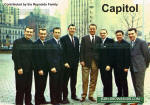
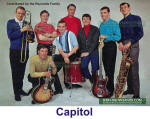
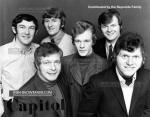
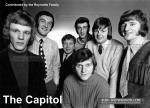
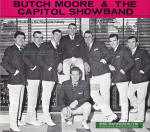
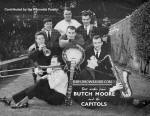
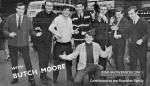
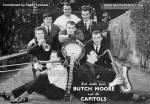
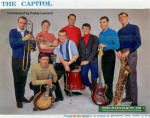
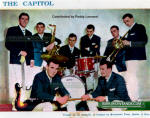
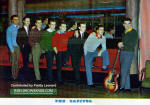
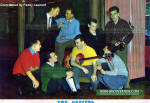
The Capitol Showband
(1959-1972)
Photo Gallery -
Band Lineups -
Discography
- Audio samples -
Where Are They Now?
The Story
Written by Gerry Gallagher and John Baird
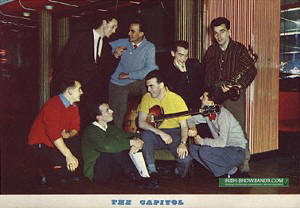 The
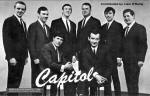
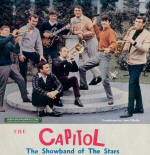
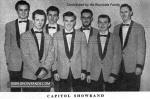
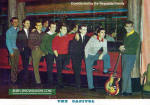
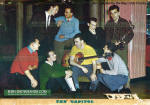
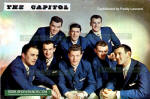
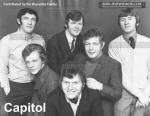
story of one of Ireland's greatest showbands, The Capitol, really
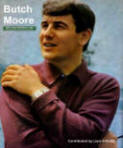
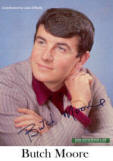
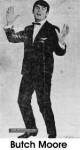
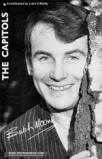
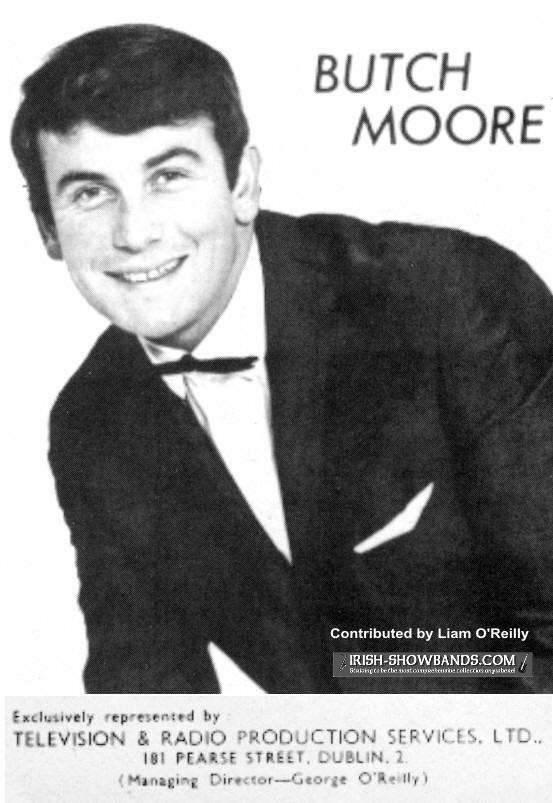
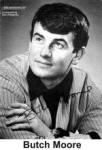
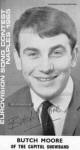
starts in 1958 when Dubliner James "Butch" Moore, a printing apprentice by
day, left the Melochords (a band he had formed in the mid 1950's)
and joined the popular Dublin band, The Blue Clavons. At a time when
many of the bands that would populate the showband boom were
actually resident bands for a specific ballroom (and playing
semi-professionally), the Clavons were setting attendance records at
the Olympic Ballroom in Dublin. It was during this period that Butch
first met Des Kelly at a gig in Galway.
The
story of one of Ireland's greatest showbands, The Capitol, really
starts in 1958 when Dubliner James "Butch" Moore, a printing apprentice by
day, left the Melochords (a band he had formed in the mid 1950's)
and joined the popular Dublin band, The Blue Clavons. At a time when
many of the bands that would populate the showband boom were
actually resident bands for a specific ballroom (and playing
semi-professionally), the Clavons were setting attendance records at
the Olympic Ballroom in Dublin. It was during this period that Butch
first met Des Kelly at a gig in Galway.
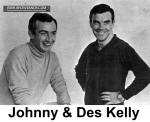
Down in Galway, in the early 50's, brothers Des
and Johnny Kelly joined with sister, Bernie and other local
musicians to form the Quicksilver Dance Band. The lineup included
Michael Costello, Joe Morris, Joe Killarney and Bridie Carrick.
(Christy Dooley, Mickey Devaney and Frank O'Brien would also play
with the band at different times).
In 1959, having learned his craft with the
Quicksilver Dance Band, Des moved to Dublin in
the middle of his college studies to complete an agricultural degree
at UCD and the Quicksilvers were disbanded. In Dublin, Des met Paul
Sweeney (trumpet) and Eamonn Monaghan (piano) and together with
drummer Tommy McNamara, they started gigging around town as the
Claddagh Quartet. That summer, Paul and Eamonn went to Galway and
together with former members of The Quicksilver Band (Johnny
Kelly, Christy Dooley, and Mickey Devaney), played the area as The
Des Kelly Band.
When the lads returned to Dublin to continue
their studies, they were spotted by manager Tom Doherty (brother of
Jim) who convinced them they should form a showband. Tom like the
Royal's idea of using the name of a theatre and the fact that the
name didn't have too many letters for posters and publicity
materials. Starting first as a semi pro outfit (needing to continue
their studies) the band drafted Eddie Ryan (sax) and Pat Loughman
(trombone).
Meanwhile, in 1960, Butch was recommended to
the Billy Carter Band (resident in the National Ballroom) and he
promptly left the Blue Clavons and joined Billy, further honing his
skills both on guitar and as a singer.
 Des
wanted Jimmy Hogan
(guitar) from the Clavons to join their band, but unfortunately, Jimmy
had to play out his time with the band so Galway man Joe Dolan stood in on guitar
for a couple of months. Des' brother, Johnny, came up from Galway to join the band
and Pat Loughman (trombone), Paul Sweeney (trumpet), and Eddie Ryan
(sax) filled out the lineup.
Des
wanted Jimmy Hogan
(guitar) from the Clavons to join their band, but unfortunately, Jimmy
had to play out his time with the band so Galway man Joe Dolan stood in on guitar
for a couple of months. Des' brother, Johnny, came up from Galway to join the band
and Pat Loughman (trombone), Paul Sweeney (trumpet), and Eddie Ryan
(sax) filled out the lineup.
In early 1960, the band was playing gigs in and
around Galway and was promoted as "Des
Kelly and his Capitol Showband." Early adverts listed the band as
being from "Galway" and even more interesting the band featured:
"5-Star vocalists, 1 whistler and 2 electric guitars" (see below).
There seemed to be some confusion about the band's origins as they
were often reported on as having "played Dublin's biggest venues" as
well as being "from Galway. One thing for sure was that they were
going places and playing all across the country.
By the end of 1960, the boys seemed to be everywhere (see below
where they are listed three times in the one paper).
Shortly thereafter, (we think in early 1961) Des recruited Butch
from the Billy Carter Band and the Capitol were now an eight
piece showband working on a semi pro basis.
In a 1968 Spotlight article, leader Des Kelly said, "...we had
another long talk and we decided it was either stop being musicians
and get down to serious study or give up the idea of a university
education and turn professional." In June, 1961, after playing around
Dublin and Galway, the band decided to go professional with Jim Doherty
(brother of Miami manager Tom) as
their manager. However, Loughman and Ryan decided to stay with their
day jobs and were replaced by Don Long of Cork (formerly with the
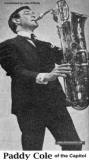
Donie Collins Band) on trombone and Paddy Cole (of the Maurice Lynch
Band) from Castleblaney on sax.
Now set, the band took the nation by storm,
soon drawing crowds that rivaled The Royal and Clipper Carlton. In
1961, they did their first tour of the United States during the Lent
season when the Irish ballrooms closed down. In 1963, they became
the first showband to appear on RTE Television when they joined
Sligo based singer, Maisie McDaniel on her half hour show (Maisie would be recruited by
The
Nevada in 1965 but did play for long because of an injury).
In 1963, after the band's second trip to the
United States, Paul Sweeney quit to return to his architectural
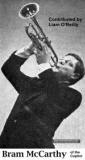
studies and was replaced by Corkman, Bram McCarthy, who was
recommended by Don Long. In late 1963, following the success of the
Royal Showband's single, Come Down The Mountain Katy Daly (the first
single by a showband), the Capitol recorded young songwriter,
Phil Coulter's tune, Foolin' Time, which reached number 3 in the Irish
charts in February, 1964. They followed with another Coulter song,
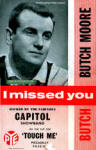
I Missed You. Also in May, 1964 the Capitol became the
first showband to appear on the very popular Sunday Night at the London Palladium.
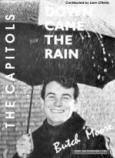
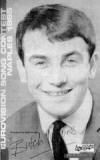
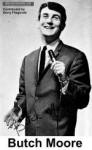
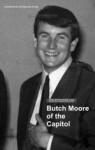
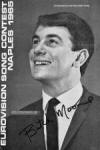
In 1965, Butch was
chosen as Ireland's first representative in the Eurovision Song Contest which
was held in Naples, Italy. The entry, Walking The Streets In The
Rain, became his third consecutive Irish Number One, although
Ireland finished a respectable sixth in the Eurovision voting. With
the success at Eurovision, the Capitol became even more popular and
outdrew even the Royal in some venues.
 1965
and 1966 were banner years for the band. The crowds were huge, the
money was fantastic and the band lived it up at home and abroad.
Eventually though, in September 1966, Butch Moore was drawn away from the band
by a lucrative offer. He was offered a solo career which would
include stints in Las Vegas, but it never really materialized.
1965
and 1966 were banner years for the band. The crowds were huge, the
money was fantastic and the band lived it up at home and abroad.
Eventually though, in September 1966, Butch Moore was drawn away from the band
by a lucrative offer. He was offered a solo career which would
include stints in Las Vegas, but it never really materialized.
By 1967,
Butch was playing the fledgling cabaret circuit in Ireland with a
trio featuring his brother, Des Moore on guitar. After two years
though, he decided to emigrate to the United States where he rebuilt
his career and lived until his death in 2001.
Meanwhile, the Capitol was decimated. Although
comprised of the country's top musical talent, Butch had been the
main attraction and his departure left a gaping hole. At one point
Johnny McEvoy was rumoured to be a possible replacement, but in the
end Butch was
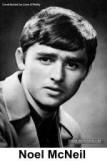
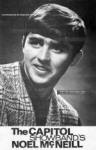
replaced by Noel McNeil. However, Noel's time with the band was
limited as he was not happy traveling. In an article in
Spotlight magazine Jim Hand, the band's manager in the late
sixties, said Noel was
joining Tommy O'Brien's band in Clery's Ballroom. Noel was replaced
by John Drummond in July, 1967. John from Scotland, was also an
excellent musician who had been doing session work in London and would eventually become one of the top
session musicians in Ireland. Initially he played rhythm guitar and
was the lead vocalist.
Also in 1967, Des tried his hand at
recording with a country number, The Streets of Baltimore...it
went to Number 3 in the Irish Charts. Later the same year, brother
Johnny had a massive hit with Black Velvet Band, which stayed in
the Irish charts for 23 weeks and hit number one in June. The
hit records helped keep the band in the public eye and they
continued to draw well. In late 1967, the band did a ten day tour of
the United States without Johnny who had to stay in Ireland for a
hernia operation. In his place Frank Darcy from Louth stepped in on
drums. Also in late 1967 John Drummond announced he was
applying for Irish citizenship. In November, 1967 an article in
Spotlight announced that Des was leaving the band temporarily due to
a bout of pneumonia which had continued to bothered him since
August. It was reported that he would return by Christmas.
In 1969, Des came down with another bad
case of pneumonia from which he took a long time to recover and
he decided to call it quits, moving into management. In February,
1969, the band headed off to Canada for a six week tour, presumably
for the Lent break in Irish Halls. Sometime in mid 69 John Drummond moved over to play bass. Also, in an
article in Spotlight on 5th September, 1969 the band announced John was
leaving to take an A&R job with Eamonn Andrews Studios. The
article also said he would be staying with the band until a new
lead singer was found.
A few weeks later the band announced the
addition of Tony Leary as lead vocalist, Mike Dalton as the new bass
player and Mickey O'Neill on drums. At the same time Don
Long left the band and emigrated to Manchester and Johnny
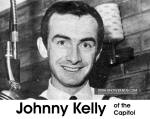
Kelly
left to manage the new Virginians band which featured Charlie Arkin
and Basil Hendricks, two top country musicians. The lineup was
rounded out with Paddy, Eamonn, Bram and Jimmy.
In late January, 1970, it was reported in
Spotlight that Tony O'Leary had been selected to sing in the
National Song Contest after Joe Dolan passed on the opportunity.
Along with Tony Kenny, they were the only showband singers in the
contest that year. Unfortunately for both of them, it was also the year Dana
sang "All Kinds of Everything" which won the Eurovision,
giving Ireland its first win in just its sixth year taking part in
the contest.
In early 1970, Jimmy Hogan and Eamonn
Monaghan decided to form their own band called the Cabaret All
Stars and left the ballroom circuit. Within a short time, they changed the name to the Spotlights
Banjo Band (or the Spotlights). In 1970, they released several singles including "Maguerite"
and "Smokey Hollow," but did not have much success. The other
members of the four piece group were Mike Short (bass) and Kevin
Brady (drums).
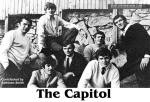
 The final phase of the Capitol included none of
the original members...only Paddy Cole and Bram McCarthy remained from
the band's heyday. The band replaced Jimmy with Frank Murray on
guitar and played for the best part of a year as a six piece.
However, in October, 1970, they added Stan Burns from Sligo
(sax-formerly with Jack Ruane's Band) to beef up their sound. In
fact at the time, Bram McCarthy was quoted in Spotlight as saying
once in a while the relief group had more members than the Capitol.
The final phase of the Capitol included none of
the original members...only Paddy Cole and Bram McCarthy remained from
the band's heyday. The band replaced Jimmy with Frank Murray on
guitar and played for the best part of a year as a six piece.
However, in October, 1970, they added Stan Burns from Sligo
(sax-formerly with Jack Ruane's Band) to beef up their sound. In
fact at the time, Bram McCarthy was quoted in Spotlight as saying
once in a while the relief group had more members than the Capitol.
Although still a great
band musically, the magic of the Capitol was gone. Throughout 1970
and into 1971, the band played to ever smaller crowds. Finally,
Paddy and Mickey were offered jobs in Brendan Bowyer's Big Eight band which
played much of the year in Las Vegas. They stayed in Ireland
rehearsing while the rest of the Capitol went on an extended tour of
Canada. Mickey was replaced by Eamonn Donnelly who had previously
been with The Mexicans. By November 1971, the
band broke up with Tony O'Leary, Bram McCarthy and Mike Dalton
joining a revamped Smokey Mountain Ramblers. In 1974, Paddy
Cole and Mike Dalton would leave the Big 8 and form the Paddy
Cole Band.
In 1984, they reunited with
Butch Moore for a
month long Irish tour which was well received, but Butch
returned to the States and opened a pub in Massachusetts. Paddy Cole
had gone on to form the Paddy Cole Superstars and Des Kelly went
back into band management.
Sadly, three of the original members of the
Capitol have passed away. Butch Moore died in the States in 2001,
Bram McCarthy sadly died at a very young age in 1987 and Johnny
Kelly also passed away in 1987. Paddy Cole continues to play to this
day and has done very well as one of the legends of the showband
era. In October 2007, Don Long passed away. Original guitarist Joe
Dolan passed away in 2008.
The rest of the band continued to play on and off, mostly in
local and casual bands. Stan Burns went on to become one of the top
surfers in Ireland in the 1970's as well as an Irish basketball
International, today he lives in County Leitrim and still plays with
his own jazz quartet.
Overall, the Capitol had a major impact on the
showband era in Ireland. To this day, their talent and popularity
are legendary. However, unlike many other showbands, when the scene
changed, they did not adapt and while others like the Nevada, Miami,
and Plattermen continued to play well into the 1980's, the Capitol barely
made it out of the 1960's...one of the casualties of the changing
music scene in Ireland.
Butch Moore came home to Ireland in October, 2000 to
appear with the Showband Show's "Hucklebuckin Again Tour" along with
Brendan Bowyer and Roly Daniels. Sadly, he passed away less than six
months later at his home in the United States.
*Some background information for this feature
sourced from Send Em Home Sweatin' by Vincent Power.
Photo
Gallery
Click on thumbnails for full images
 |
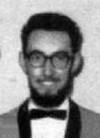
Butch Moore:
RIP
Butch left the band in 1966 and was replaced by Noel
McNeill. He went into the cabaret scene where he didn't do as
well as expected. In 1970, after a divorce, he emigrated to
the United States and
started a cabaret act with Maeve Mulvany, who he would
eventually marry. They owned a pub,
The Parting Glass, in Massachusetts where they settled and
had three children. Butch returned to Ireland in 2000 for a
tour with the Showband Show, but passed away on April 3, 2001
(less than six months later) at
the age of 63. Sadly, Maeve passed away a few years later
in 2004 at the age of only 58. |
 |
Joe Dolan:
RIP
Joe was an art student in Dublin when the Capitol were
formed. He played guitar with them until Jimmy Hogan and
Butch Moore joined from the Blue Clavons. When at home in
his native Galway he played with the Swingtime Aces. He was
still with them when we did a two band session in Loughrea
in 1961. After retiring, Joe was a professional artist in Co. Galway
until his sad passing from cancer in late 2007.(from Pat Loughman) |
 |
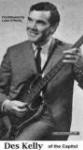
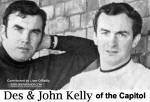
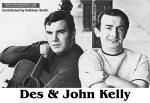
Des Kelly - RIP:
After leaving the Capitol Des went into entertainment
management and was very successful. He launched the highly
successful Smokey Mountain Ramblers, featuring Pat Ely, one
of the top country bands of the era. For many years,
Des was a regular performer in his native Galway. He
also presented a Sunday evening music programme on Galway Bay FM
between 6 and 8 p.m.
Des sadly passed away April 1st, 2017 after a lengthy
illness. |
 |
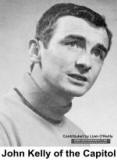
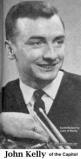
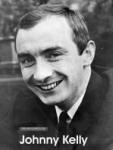
John Kelly:
RIP John sadly passed away
in 1987 |
 |
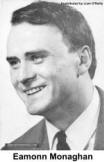
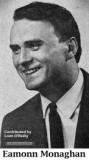
Eamonn
Monaghan:
After leaving the Capitol, Eamon formed the the Cabaret All
Stars with Jimmy Hogan and eventually changed the name to
the Spotlights Banjo Band. According to a recent article in
the Irish Independent, "By 1972, he
had left show business behind turning to pursue business
interests, first with a builders' providers company and
eventually owning a successful bathroom accessory business
called "Elegant John Bathrooms" with his friend Paddy Cole
lending a hand."
He still plays today and can be found
tickling the ivories in the Clyde Court Hotel in Ballsbridge
most weekends. |
 |
Eddie Ryan: After
leaving the Capitol, Eddie played with the SIPTU band
|
|
|
Paul
Sweeney: We
understand that Paul
is a highly respected architect.
|
 |
Pat Loughman - RIP: Pat
played through the seventies and eighties with the
Dublin Concert Band and often could be found jamming at the
Cork Jazz Festival. He had been playing trombone with the
Communications Workers Band in Dublin where he lived. He
also played trumpet in a big band which includes Harvey Roche
(Donie Collins Band), and Pat Elgart. However, we
received a very sad email from Pat's daughter, Patricia,
telling us that Pat sadly passed away on April 21st, 2011. |
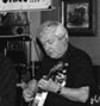 |
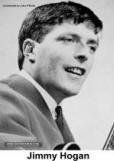
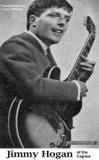
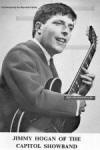
Jimmy Hogan: From
the Capitol, Jimmy formed the Cabaret All Stars with Eamon
Monaghan. They eventually became the Spotlights Banjo Band
and played in the early 70's. In 1972, Jimmy joined Brendan
SHine's new Superband. We know that
Jimmy still gigs (though not to the same extent as
he used to) but we do not know if he played with any other
bands after the Brendan Shine band. |
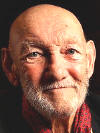 |
Paddy Cole - RIP: Paddy
left the Capitol to join the Big 8 and then went on to form
the the Paddy Cole Band, which after
a few changes became the Paddy Cole Superstars. The
Superstars were on the scene longer than many of the other
bands from the era and kept reinventing themselves to stay
with the times. For decades Paddy was one of the best known
proponents of jazz music in Ireland and toured continuously
withy his band playing major festivals and theatres. He also
hosted his own radio show on Dublin's FM 106.6. Sadly, Paddy
passed away after a long fight against cancer on January 23,
2025. Our sincere sympathies are extended to his wife,
Helen, his family, friends and fans across the world.
|
 |
Bram
McCarthy:
RIP Bram sadly passed away. |
 |
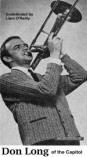
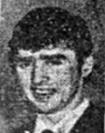
Don Long: RIP
After leaving the band and Ireland in
1969, Don later did several
European tours with Bob Wallis and his Storyville Jazzmen
and for many years led his own band, six nights a week, at
Manchester’s Ganders Go South. They backed many top British
and American jazzmen as well as playing two spells a year at
the famous Casa Bar in Zurich. In 2004, Don was the leader of
the Jazz Gentlemen, a Manchester jazz group.
Sadly, Don passed away on October 29, 2007 after a year long
battle with cancer. He was 69. |
 |
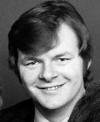
Noel McNeil - RIP:
Peter West emailed us in July, 2011 to tell us that sadly
Noel passed away in the UK some years ago.
If you have additional info please email us |
 |
Mike Dalton - RIP: Mike moved from the Capitol to the
Smokeys
in the early 70's and then on to the Paddy Cole Superstars.
He was living in Askeaton, but sadly passed away in 2014.
|
|
|
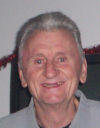
John
Drummond: John became one of Ireland's top session
musicians. Today we understand he lives in County Leitrim
where he teaches music. |
 |
Mickey O'Neill - RIP:
Mickey recently wrote us: I was looking at your website
(Capitol Showband) and saw that you wanted updated info on
me (Mickey O'Neill). I've lived in Las Vegas for the
past 25 years and was the drummer with Brendan Bowyer's
Royal Irish (known in Ireland as the Big Eight). I'm
retired, but still play some gigs with Michael Keane, Jimmy
Conway and D.J.Curtin (from the Big Eight and Kerry Blues).
Mickey lives in Vegas with his longtime partner Mary Schwartz
with his two sons Alan and Mark. Sadly Mickey lost his other
son, Michael in 2005 as a result of a car accident at the
age of 21. Further to this listing, Mickey sadly passed away
on June 15, 2010. A friend to the site before his death, our
sincere sympathies go out to his family and friends in
Ireland and the USA. |
|
|
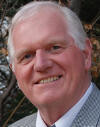
Stan Burns: Stan
Burns retired from the road and became an International
basketball player as well as an Irish surfing champion in
the 70's and 80's. All the while, Stan has played locally
and in jazz clubs in the Northwest with The Jazz Ladds and
his own band, Katch. Today Stan lives in County Leitrim
area where he teaches music and also sometimes plays the local
pub scene with his own jazz trio. |
 |
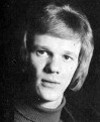
Tony
O'Leary - RIP: After leaving the Capitol, Tony joined the
Smokey Mountain Ramblers, along with several other members
of the band. After a short time sharing top billing with Pat
Ely, Pat left and formed the Rocky Tops. For a time in the
early seventies, we know Tony stayed with the Smokeys and
then joined the Gallowglass Ceili Band. At some point in the
mid 70's it appears Tony purchased the Gallowglass and
changed its name for a short time.
Sadly, Tony (real name Richard) passed
away on May 28th, 2021 after a long illness. |
 |
Frank
Murray: RIP We received an email
from Sloan Harrington in the United States telling us that
Frankie sadly passed away in April, 2009. A check of RIP.ie
shows that Frankie died on April 6th. |
|
|
Eamonn
Donnelly: We know that after the break-up of the
Capitol, Eamonn went to the Sun Valley Boys which featured
Denis Bowler. That band may have broken up around 1973-4 and
we do not know what happened to Eamonn after that. Unknown - if you have info please email us |