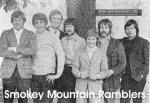
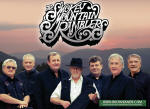
Smokey Mountain Ramblers (1968-1975)
Photo Gallery -
Band Lineups -
Discography
- Audio samples -
Where Are They Now?
The Story
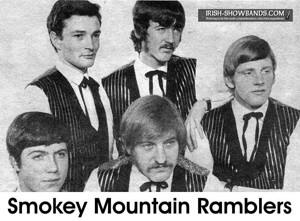 The story of the Smokey Mountain Ramblers started when Jerzy Kryzanowski
(better known in Ireland as George Kaye) came to Ireland to busk, having spent
time around the folk clubs of England. Instead, he found himself
doing the pub scene and formed the Mitchell County Ramblers with
Clive Collins. It was late 1967 and George had decided it might be time
to go home when he was approached by
Galway's Des Kelly of the famous Capitol Showband. Des saw the trend of
country music coming to the showband scene before anyone else had a
chance to react. George went home for a holiday at Christmas and
returned to join a new type of band. Naming
them the Smokey Mountain Ramblers, Des wanted something totally
different, not like Big Tom or Larry Cunningham (both of whom were
more "country n' Irish").
The story of the Smokey Mountain Ramblers started when Jerzy Kryzanowski
(better known in Ireland as George Kaye) came to Ireland to busk, having spent
time around the folk clubs of England. Instead, he found himself
doing the pub scene and formed the Mitchell County Ramblers with
Clive Collins. It was late 1967 and George had decided it might be time
to go home when he was approached by
Galway's Des Kelly of the famous Capitol Showband. Des saw the trend of
country music coming to the showband scene before anyone else had a
chance to react. George went home for a holiday at Christmas and
returned to join a new type of band. Naming
them the Smokey Mountain Ramblers, Des wanted something totally
different, not like Big Tom or Larry Cunningham (both of whom were
more "country n' Irish").
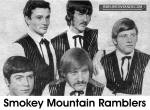
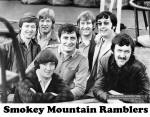
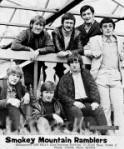
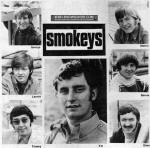
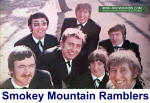
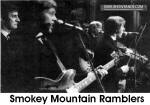
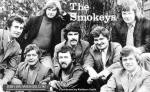
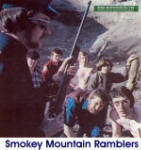
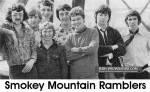
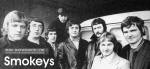
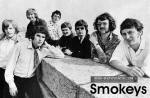
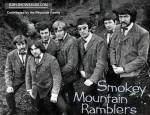
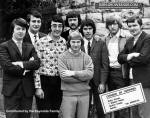
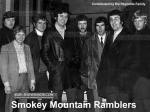
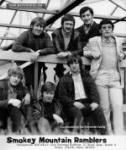
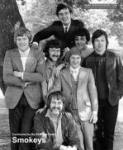
The original lineup of the band
included: George Kaye on fiddle, Dave Kearney (RIP) on guitar and Martin
Johnson (RIP) on bass (both formerly of The Movement), Paul
Kenny (RIP-drums, he had played with the System Showband previously), and John Cook (guitar and dobro,
touted as the owner of the "only dobro in Ireland" at the time). The band hit the road in early 1968 and soon released their
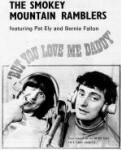
first single, "Ballad of Amelia Earhart." Although the band
garnered a lot of attention, their strong bluegrass influence did
not catch on with dancers who were used to hearing the "country and
Irish" music of Big Tom and Larry Cunningham. Early on,
John Cook, who worked with Aer Lingus (although he had studied hotel
management) in his day job, found life on
the road too demanding and decided to leave and was replaced by
Lennie Power on guitar.
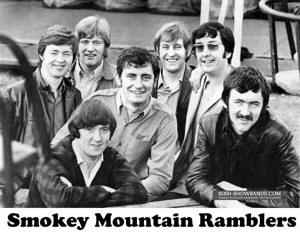 As the band's single, Amelia Earhart was winding down, Des
decided the band
needed a change in direction with a vocal front man and a line-up
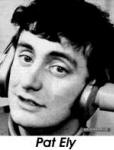
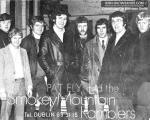
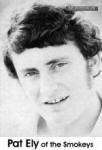
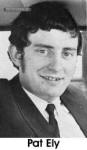
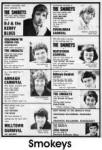
which was closer that of a traditional showband. In the October 19th, 1968 issue of
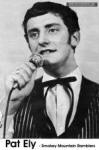
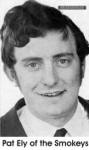
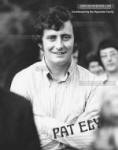
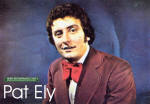
Spotlight, a small article announced Pat Ely was joining the
band as its new lead singer. Pat had previously been with
Carrick-On-Shannon's Savoy
Swing 7 and was being compared to Jim Reeves in publicity
promotions for the Swing 7 (this continued with the early Smokeys). In fact, Pat, Tommy Higgins (keyboards) and Bernie Fallon
(drums) had all been with the Savoy Swing 7, who had recently
dropped the Savoy off the name and had become simply the Swing Seven
who were being managed by Eamonn Hughes.
As the band's single, Amelia Earhart was winding down, Des
decided the band
needed a change in direction with a vocal front man and a line-up
which was closer that of a traditional showband. In the October 19th, 1968 issue of
Spotlight, a small article announced Pat Ely was joining the
band as its new lead singer. Pat had previously been with
Carrick-On-Shannon's Savoy
Swing 7 and was being compared to Jim Reeves in publicity
promotions for the Swing 7 (this continued with the early Smokeys). In fact, Pat, Tommy Higgins (keyboards) and Bernie Fallon
(drums) had all been with the Savoy Swing 7, who had recently
dropped the Savoy off the name and had become simply the Swing Seven
who were being managed by Eamonn Hughes.
In the end, Pat, Tommy and Bernie
moved over to the Smokeys with
Paul Kenny (RIP-drums) going to the Cotton Mills Boys. Things were not going well for the Swing 7
when Des Kelly contacted the boys looking for musicians to round out
the Smokeys.
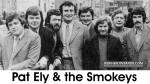
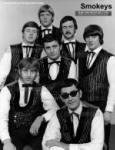
Shortly after the band expanded to a seven piece they embarked on a
month long tour of the US Military bases across Europe in March,
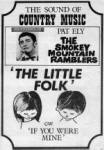
1969. At the same time, they released a new single which featured
Pat entitled, The Little Folk (a hit in the USA for Charlie
Pride in 1967). Pat's addition to the band paid off with immediate success
the record made it to number 13
in the Irish charts. In April, the band appeared alongside American
star Hank Locklin at the Danny Pearse Tribute Concert in Dublin. The
country boom was in full swing and the Smokeys were one of the first
bands to climb to the top of the new genre.
In November, 1969, the band had a
scare when George Kaye collapsed on stage in Donegal. He was off the
road and hospitalized for several weeks in Dublin, but thankfully
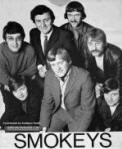
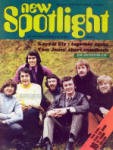
was not seriously ill. During 1970, the band continued to
consolidate its position as one of the top five country bands in
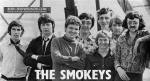
Ireland, appearing on the cover of Spotlight magazine. The
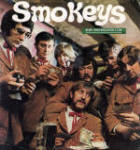
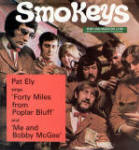
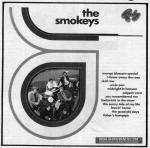
band also released its first album, The Smokeys, the same
year.
In
August, 1970, the Smokeys were hit by its first serious lineup
change when founding member George Kaye decided to return to England and
left the band after about 2 1/2 years on the road. In a recent
email, George reported that his reason for leaving the band was
"burnout, we had played 64 gigs in a row and that did it for me." In an article in Spotlight, co-manager Johnny
Kelly reported that George would be replaced with a sax player, giving
the band more versatility in their music. A few weeks later,
Johnny's brother Des Kelly responded to the crisis by announcing the
Smokeys would be featuring two sax players in the future and would
be featuring Cajun music in their updated programme. Joe McIntyre (Swingtime
Aces and Johnny Flynn Band) and Tony Cannon replaced
George and the band was now an eight piece.
When George Kaye left
the band and went to England, he formed a bluegrass group there called White
Lightning in the Nottingham area with his brother, Thaddeus Krzyzanowski
(RIP - guitar). In May, 1971, George was invited to return to
Ireland to form an electric band and he returned with several group members including his
brother, Thad, and Terry Foster (banjo).
They formed a band called Real Country
adding to their ranks Bernie Fallon, (who left the Smokeys
and was replaced by Alfie Merrigan),
Joe Murray (lead vocals and keyboards from the Firehouse), Vinnie Baker
(guitar also from the Firehouse) and Shea Cribben (bass from the
Riviera
Showband which broke up a few months earlier).
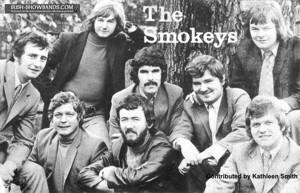 An article in
Spotlight
dated October 7, 1971 reported that Eileen Reid, former lead singer
with the Cadets was joining the band, which was going to drop the
name Real Country and become the George Kaye Band featuring Eileen
Reid. The move meant George's brother, Thad, would be dropped
from the lineup which did not sit well with George and he opted not
to play with the new outfit. In the end, Eileen formed a band called The 2nd Sound and
George formed a
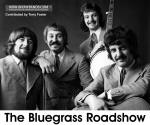
four piece bluegrass band which played acoustic music. The band
(pictured below) was George Kaye and the Bluegrass Roadshow.
It featured George (fiddle), Thad (RIP - guitar), Bernie Fallon (RIP
- string
bass) and Terry Foster (banjo).
An article in
Spotlight
dated October 7, 1971 reported that Eileen Reid, former lead singer
with the Cadets was joining the band, which was going to drop the
name Real Country and become the George Kaye Band featuring Eileen
Reid. The move meant George's brother, Thad, would be dropped
from the lineup which did not sit well with George and he opted not
to play with the new outfit. In the end, Eileen formed a band called The 2nd Sound and
George formed a
four piece bluegrass band which played acoustic music. The band
(pictured below) was George Kaye and the Bluegrass Roadshow.
It featured George (fiddle), Thad (RIP - guitar), Bernie Fallon (RIP
- string
bass) and Terry Foster (banjo).
Vinny Baker (RIP) wrote to
tell us that 2nd Sound didn't last for more than two years, they released
one single and eventually included Jimmy Day and Eileen Reid in its
ranks for about a year. In the meantime, George realised Ireland was
still not ready for bluegrass and returned to England yet again.
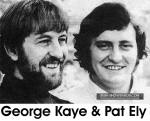
Eventually George would return to
Ireland to rejoin Pat Ely
in the Rocky Tops. Thaddeus and Terry stayed in England, but
sadly Thaddeus was killed in an airplane crash a few years later.
Vinny left 2nd Sound in 1971 and Joe Murray joined the Smokeys before ending
up with Margo's Country Folk.
The New Smokeys
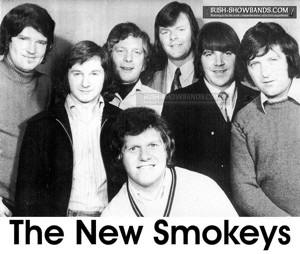 Meanwhile back at the Smokey's
ranch, the months after George's departure would result in massive
changes to the band's lineup. The Capitol,
one of the top 60's showbands on the circuit were on their last
legs. They had been struggling for a couple of years and as the
summer season ended, the time came for them to fold. In an article in the November 4, 1971 issue of
Spotlight, Des Kelly
announced that three members of the Capitol would be joining the
Smokeys: Bram McCarthy (RIP - trumpet), Tony O'Leary (vocals), and Mike
Dalton (bass). They would be joining Pat Ely, Joe McIntyre (sax),
Dave Kearney (RIP - guitar) and Alfie Merrigan (drums).
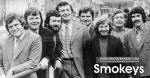
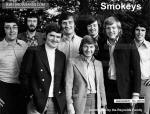
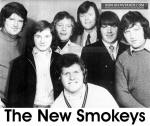
Departing would be Tommy Higgins, Martin Johnson (RIP), and Tony Cannon. The revamped lineup of the band was pictured on Pascal Mooney's
"London Calling" page in the November 18, 1971 issue of Spotlight. Dave Kearney left the band at this
time as well.
Meanwhile back at the Smokey's
ranch, the months after George's departure would result in massive
changes to the band's lineup. The Capitol,
one of the top 60's showbands on the circuit were on their last
legs. They had been struggling for a couple of years and as the
summer season ended, the time came for them to fold. In an article in the November 4, 1971 issue of
Spotlight, Des Kelly
announced that three members of the Capitol would be joining the
Smokeys: Bram McCarthy (RIP - trumpet), Tony O'Leary (vocals), and Mike
Dalton (bass). They would be joining Pat Ely, Joe McIntyre (sax),
Dave Kearney (RIP - guitar) and Alfie Merrigan (drums).
Departing would be Tommy Higgins, Martin Johnson (RIP), and Tony Cannon. The revamped lineup of the band was pictured on Pascal Mooney's
"London Calling" page in the November 18, 1971 issue of Spotlight. Dave Kearney left the band at this
time as well.
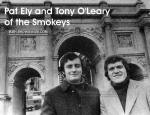
Tony O'Leary had first come to
national prominence when he sang in the 1970 National Song Contest which was
won by Dana singing Ireland's first Eurovision winner, All Kinds of
Everything. From there he had joined the Capitol as they wound down
and then was picked to front the Smokeys. (After the break up of the
Smokeys, he would go on to purchase and then front the
Gallowglass Ceili Band.)
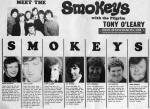
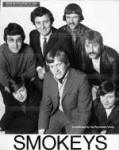
The departure of Pat Ely left the
Smokeys with Tony O'Leary as their lead singer and a band that was more
Capitols than Smokeys. In the Spotlight issue of July 6,
1972, an article about the Smokeys reported their new lineup. The
lead singer of the band was Tony O'Leary, who would eventually go on
to front the Gallowglass. Also in the band at that time were Jimmy
Murray (guitar), Joe Murray (keyboards), Bram McCarthy (RIP - trumpet), Alfie Merrigan (drums), Joe McIntyre (sax),
and Mike Dalton (bass). There is some question here about Joe
Murray's role as Vinny Baker told us Joe was with Real Country, but
Spotlight reported he was with the Smokeys. After
leaving the Smokeys in late 1971, by March of 1973 Lennie Power
(RIP) was with the folk group Thatch, which also included
future Miami guitarist, Des Flaherty. It would appear the
band went off the road at this point.
For a short time starting in
March, 1973 Big Ivan McConville was advertised as the Smokey's new
lead singer but we know this didn't last long. Meanwhile, in mid-1973 Jimmy
Higgins (of the Raindrops) was managing
a band called the Texans who lost their lead singer, Tammy, around
this same time. He saw an opportunity and bought the Smokey's name
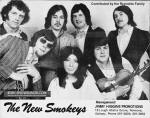
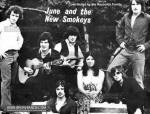
and in June 1973, the "New Smokeys" would be revamped yet again
bringing in vocalist/fiddler Chuck Owens (who had been with the
Sahara and the Texans) as well as June
McLoughlin (who had previously sang with Frank Chisum and the Top
7). A report in the Donegal News on June 16th, 1973 reported
that the new line-up was, in fact, the Texans and Jimmy Higgins
would be the new band's manager. Big Ivan would move over to front
the Lightning Express.
In October 1976, Larry Cunningham
and Margo (who had been playing together for just six months) had a
tumultouos split and the end result was Margo fronting the Blueboys,
but under the new name Blue Ridge Boys and Larry forming a new band
using June and Chuck Owens, along with two of the New Smokeys and
adding Mike Brady and Brian Finlay? from the MIghty Avons to form a
new Country Blueboys band.
Finally, a record attributed to
the Smokeys featuring Anne, was released in 1975, although we are
not sure of the lineup at that time. We will try to find out more.
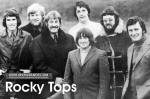
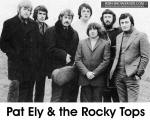
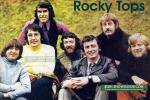
The Rocky Tops
With
the original members of the Smokeys scattered throughout Ireland,
Mighty Avons' manager Charlie McBrien saw an opportunity and
contacted Tommy Higgins to see if they could reunite the original
band that had enjoyed so much success just a couple of years
earlier. As Pat Ely was the only member remaining in the "new" Smokeys,
and Tony O'Leary had joined (who could handle lead vocals as he had
done with the Capitol), it seemed like a great idea and Pat
agreed to reunite with his old band mates.
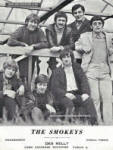
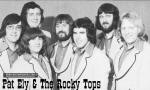
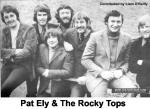
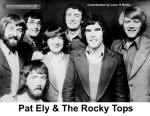
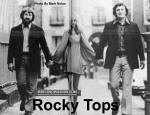
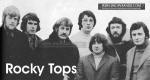
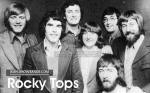
The February 19, 1972 issue of
Spotlight announced that the original Smokey Mountain
Ramblers lineup had reformed. In one of the era's most
unique stories, the band (which had been chopped and changed over
the years) decided it was time to get back together, but as the
Smokey's name was already in use, they decided to start a "new" band
and used the Rocky Tops.
Even though an article in the March 4th issue of Spotlight reported
that the original lineup was back together with the exception of one
member - Tony Cannon from Donegal on sax - this was incorrect as the
original lineup had included drummer Paul Kenny who had left to join
the Cotton Mill Boys and had been replaced by Bernie Fallon.
Additionally, Lennie Power had decided not to join the new band. The Rocky
Tops played their first date on St. Patrick's Day, 1972.
In their short time together, the
Rocky Tops released quite a few singles and had three Irish top ten hits:
All I Have To Offer You Is Me (#9), Shores of Lough Bran
(#5) and Any Tipperary Town (#10). As Pat was singing on all
the "hits" it wasn't long before he garnered some attention, even
though the band never quite achieved the same success as the
Smokeys.
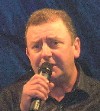
In early
1974, Pat Ely was enticed away from the band by Tony Loughman (RIP) of the Top Rank
Organisation and was asked to front a new band, the Storytellers. Frank O'Neill, who had
been with Enniskillen's Skyrockets, was drafted in on lead
vocals with the Rocky Tops and he brought in a guitarist he had played with previously as
Dave Kearney (RIP) went with Pat to join the Storytellers.
For
the Rocky Tops though, the writing was on the wall. By the
end of the year, the Rocky Tops were no more, lasting just
about two years. However, for the next thirty years, Pat Ely would
continued to perform under the Rocky Tops banner using various lineups
for
gigs around the country and in England. This often included
ex-Cottons guitarist, Francie Lenehan, who would also play with the
Smokeys 2012 reunion lineup (see below).
Although short lived in comparison
to other bands of the era, the Smokeys were one of the first
hugely successful country bands to break on the showband circuit.
Eventually bands like the Cotton Mill Boys, Ray Lynam's Hillbillies
and Bill Ryan's Buckshot would carry the country mantel (non Country n'
Irish) through the 70's and into the early 80's, but the Smokeys
were one of the first.
Burning brightly for a few years,
they often played 7 nights a weeks, which, according to Tommy
Higgins, was one of the major reasons for their eventual downfall.
"Even though we were all young men in our 20's, there was no way we
could keep up the pace night after night and in the end, it took its
toll on the band. In the end, we played 49 nights in a row and were
facing a run of 40 more consecutive nights and at that point,
something had to give" explained Tommy recently.
The Rocky Tops would continue on
for many years, although on a part time basis. Centered on the
musical partnership of Pat Ely and Francie Lenehan, the band played
a wide variety of local gigs, dances and tours of the UK in the 1970
and into the 1980's, eventually calling it quits in the early
1990's. Many Sligo musicians played with the Rocky Tops during that
time.
My thanks to Tommy Higgins for his
help in completing this story.
Smokeys 40th Reunion
Tour - October 2012
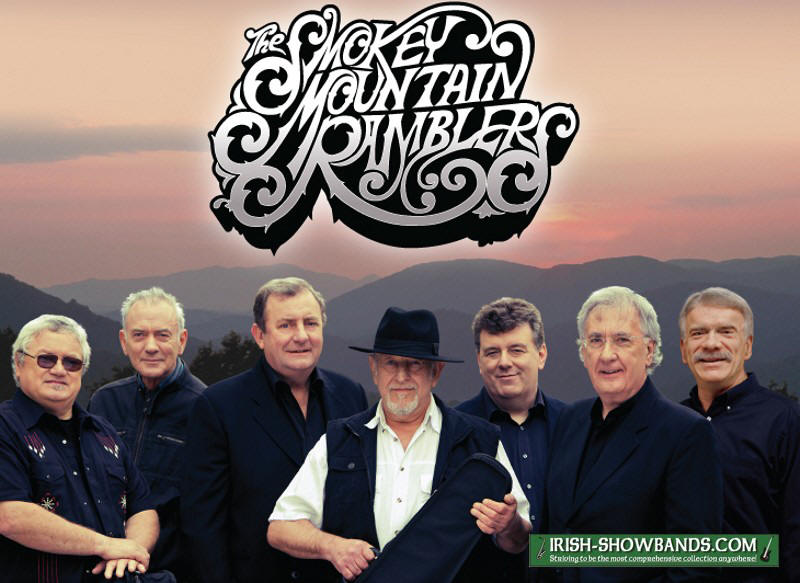 Over 40 years after their
successful run on the ballroom circuit, 2012 saw the Smokeys
reunite for a tour of the Irish dance circuit. Featuring original
members Pat Ely, George Kaye and Tommy Higgins, the band played a
series of dates augmented by former country showband musicians. The
new lineup included (left to right): Francie Lenehan (guitar - Cotton Mill Boys,
Ranchers, among
others), Tom Jamieson (drums - pictured is Gene Berrill (RIP) who
did not play on the tour as he was receiving cancer treatments), Pat Ely (vocals), George Kaye (fiddle
and vocals), Liam Gilmartin (acoustic guitar and vocals - Jargon, Ray Lynam Band),
Tommy Higgins (keyboards) and Gerry Gallagher (bass and vocals - Magic Band
and Kim Newport Band). Vinnie Baker (RIP) had originally signed up
to do the tour but decided not to do it in the end.
Over 40 years after their
successful run on the ballroom circuit, 2012 saw the Smokeys
reunite for a tour of the Irish dance circuit. Featuring original
members Pat Ely, George Kaye and Tommy Higgins, the band played a
series of dates augmented by former country showband musicians. The
new lineup included (left to right): Francie Lenehan (guitar - Cotton Mill Boys,
Ranchers, among
others), Tom Jamieson (drums - pictured is Gene Berrill (RIP) who
did not play on the tour as he was receiving cancer treatments), Pat Ely (vocals), George Kaye (fiddle
and vocals), Liam Gilmartin (acoustic guitar and vocals - Jargon, Ray Lynam Band),
Tommy Higgins (keyboards) and Gerry Gallagher (bass and vocals - Magic Band
and Kim Newport Band). Vinnie Baker (RIP) had originally signed up
to do the tour but decided not to do it in the end.
Although the tour lasted a month,
there has been no word about another reunion at this time (2018). It
seems that like so many other bands, The Smokeys have finally called
it quits.
click on thumbnails for full image