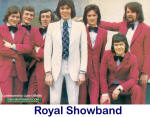
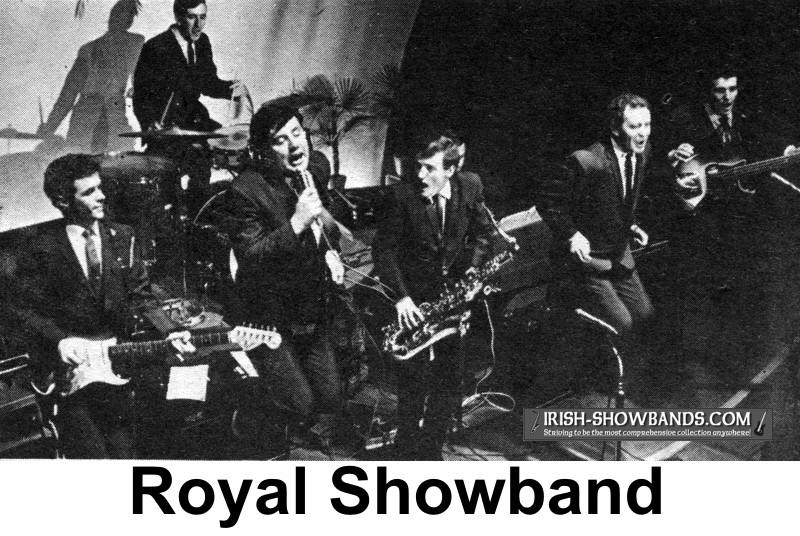
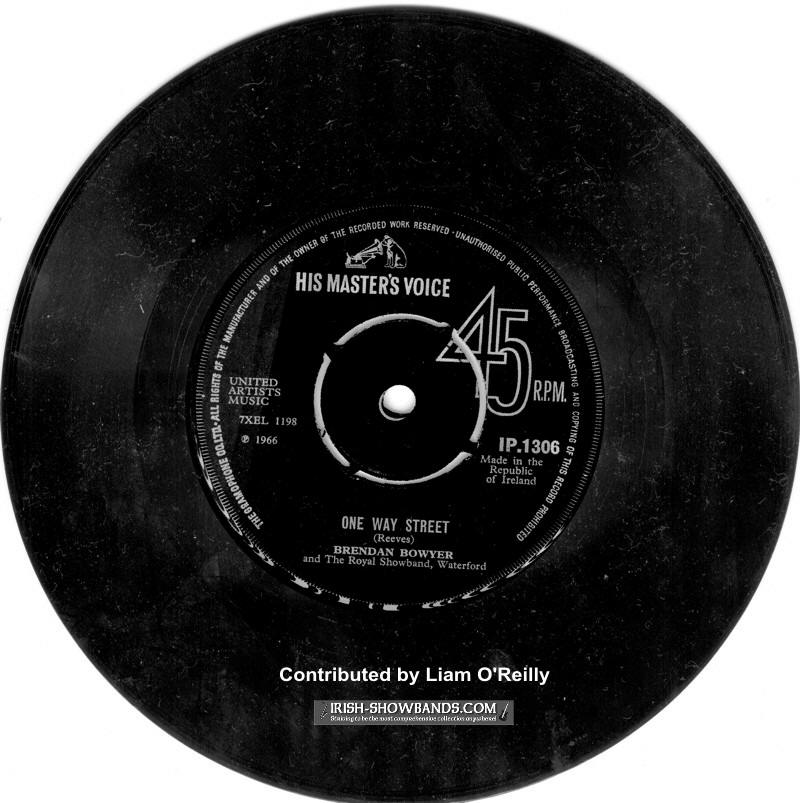
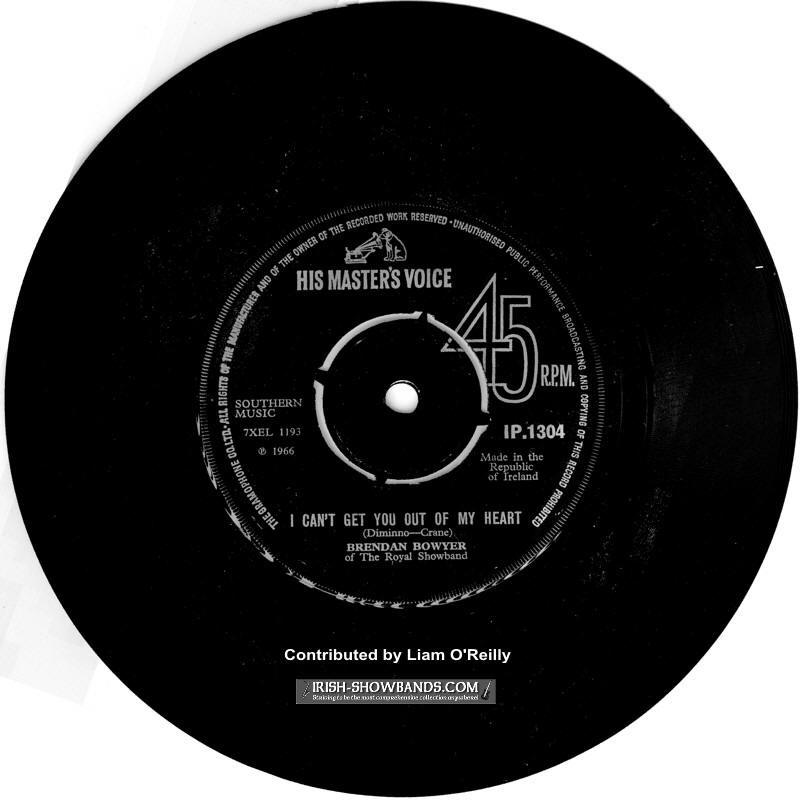
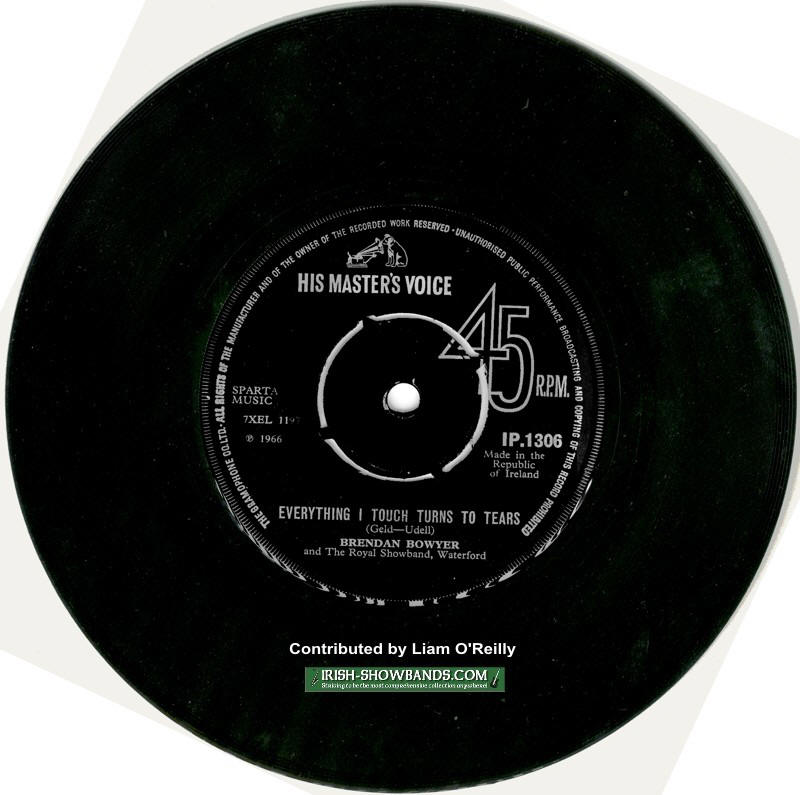
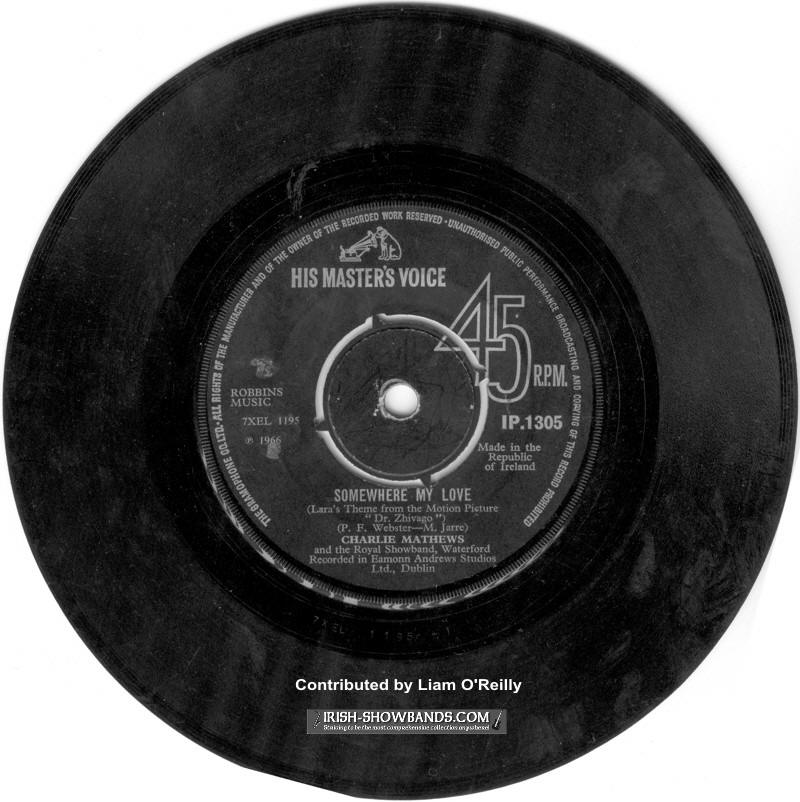
Royal Showband (1957-1975)
Photo Gallery -
Band Lineups -
Discography
- Audio samples -
Where Are They Now?
The Story
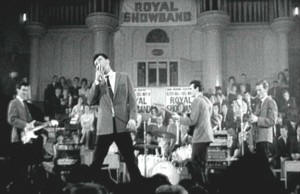 Not
much has been written, shown, or said about the Irish Showband era without
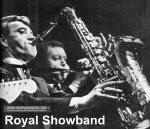
extensive reference to Brendan Bowyer and the Royal Showband. The Royal
followed the initial
success of The Clipper Carlton, the band that was credited with starting
the whole music industry upheaval in Ireland. The Clippers transformed the genre from
a conservative, static stage to an exciting display of talent, energy and
entertainment.
Not
much has been written, shown, or said about the Irish Showband era without
extensive reference to Brendan Bowyer and the Royal Showband. The Royal
followed the initial
success of The Clipper Carlton, the band that was credited with starting
the whole music industry upheaval in Ireland. The Clippers transformed the genre from
a conservative, static stage to an exciting display of talent, energy and
entertainment.
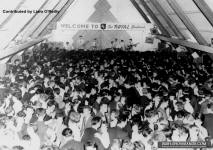
However, where the Clippers left off, the Royal took it to a
whole new level, playing to a dancing public that had awakened from the slumber
and drabness of the 50's. In 1957, the Royal came roaring out of Waterford and took
the entire country by storm, eventually setting many of the records for attendance which
stand to this day.
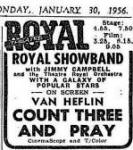
Researching the band, we found the first mention of a "Royal
Showband" in January 1956 when the Royal Theatre in Dublin put on stage shows
between the films which featured Jimmy Campbell and the Royal Theatre Orchestra.
It was basically a variety show which featured different musicians and singers
and is only interesting as a precursor of the use of the word "showband" across
the country a few years later.
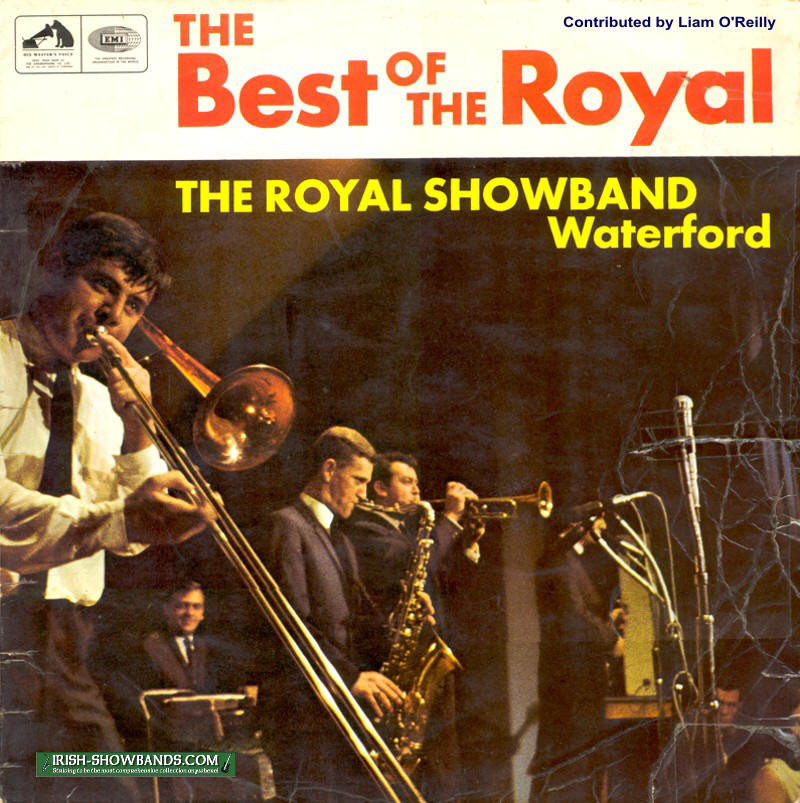
The Royal also made the first single by a showband, had the first
Irish showband number one hit on the Irish charts, and captured the imagination of a generation
in the 1960's and beyond. The Royal Showband possibly stands alone as the
most successful showband in Irish history.
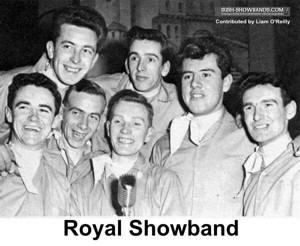 As
with most bands, tracing back their origins can be difficult. We
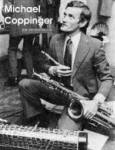
originally thought Michael Coppinger and Jim Conlon started playing
together first. Michael was the "guru" with his accordion and
saxophone and Jim played banjo and guitar. Although we figured they joined up
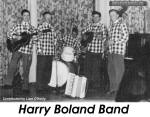
with the Harry Boland Band,
which started in early 1956,
this was not apparently the case. An advert in the Munster
Express (25th January, 1957) for a concert in the Municipal
Theatre in aid of St. Vincent de Paul listed the Harry Boland
Band as one of the participants and "Jim Conlon, guitarist" as a
separate act. One way or another they wanted to expand. "We wanted to play pop and rock music," said
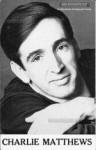
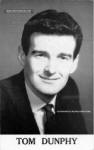
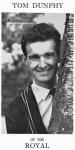
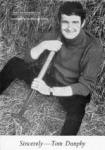
Jim Conlon a few years ago, "and we roped in Charlie Matthews, Tom Dunphy and Gerry
Cullen." Charlie, Michael and Gerry all lived in Ferrybank (Ard
Mhuire) in the same area, while Jim lived on the Cork Road - all in
Waterford of course. T.J. Byrne was managing the band at the time.
As
with most bands, tracing back their origins can be difficult. We
originally thought Michael Coppinger and Jim Conlon started playing
together first. Michael was the "guru" with his accordion and
saxophone and Jim played banjo and guitar. Although we figured they joined up
with the Harry Boland Band,
which started in early 1956,
this was not apparently the case. An advert in the Munster
Express (25th January, 1957) for a concert in the Municipal
Theatre in aid of St. Vincent de Paul listed the Harry Boland
Band as one of the participants and "Jim Conlon, guitarist" as a
separate act. One way or another they wanted to expand. "We wanted to play pop and rock music," said
Jim Conlon a few years ago, "and we roped in Charlie Matthews, Tom Dunphy and Gerry
Cullen." Charlie, Michael and Gerry all lived in Ferrybank (Ard
Mhuire) in the same area, while Jim lived on the Cork Road - all in
Waterford of course. T.J. Byrne was managing the band at the time.
Newspaper reports from the era say that the
Harry Boland Band morphed into the Royal so it is a
little difficult to tell whether there was a split or just a new
direction for the band. More recent accounts of the band's history
state they "changed their name" to the Royal Showband.
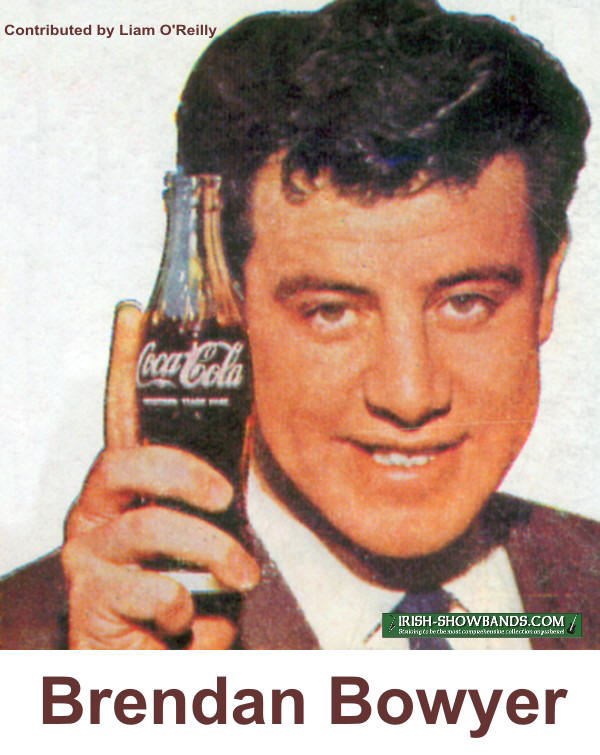
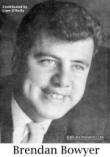
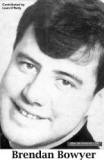
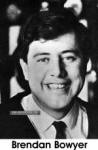
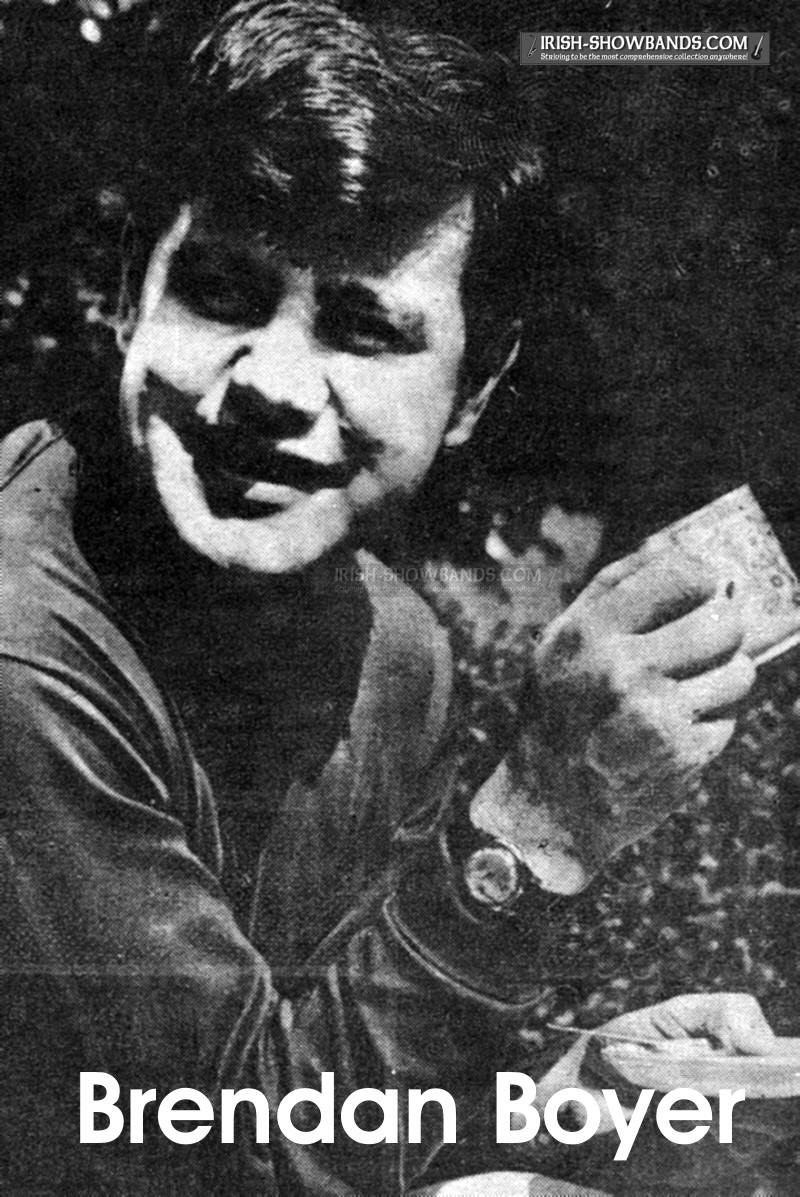
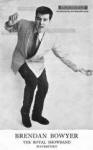
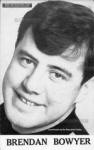
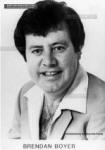
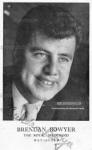
Brendan Bowyer was the only son of musical
parents so it was probably natural he would become a musician. He
made his first public appearance in the Redemptorist Church in
Limerick where his Father conducted the choir (Spotlight, July
31, 1971) After leaving school, Brendan took a job as a clerk in
Waterford and he was mates with Tom Dunphy. When Harry Boland left Waterford, the final piece of the puzzle came in the form
of Brendan who had
previously played with The
Rhythm Kings and the line up was set. Eddie Sullivan also joined
the band a short time later.
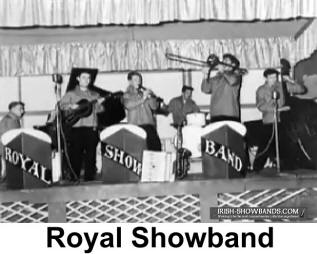 Launched in the Fall of 1957,
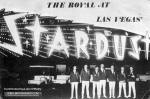
Jim came up with the name, Royal, from a local theatre, "at the
time, I felt that the band needed a name that would command respect.
So, I used the Royal (from the Theatre Royal) because it suggested
royalty (a stretch of course) and because Ireland had its own
royalty long before our neighbors across the Irish sea. It had no
connotation of the Empire. I reversed the words Band Show (the
Clipper Carlton used it at times) and (eventually) joined the words into
Showband. Tempo, acknowledged it as a "brainwave". All I can say is
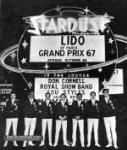
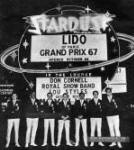
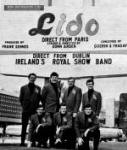
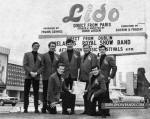
that it looked great on the Stardust Hotel sign on the Strip in Las
Vegas later on. I had to clear the name with the Theatre Royal in
Dublin at the time. They had no objections. Of course, we had our
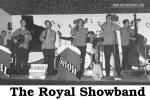
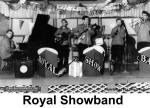
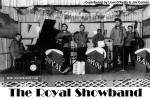
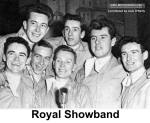
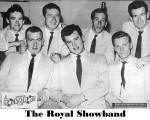
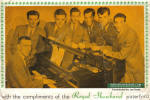
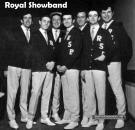
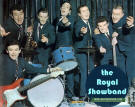
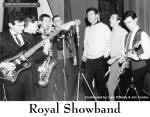
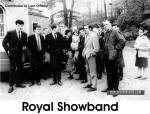
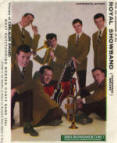
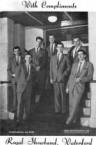
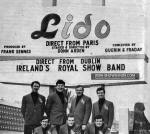
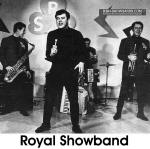
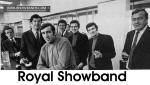
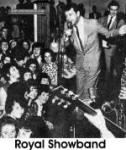
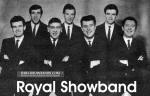
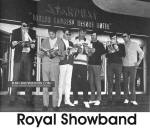
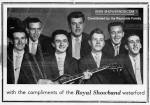
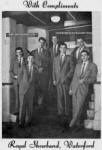
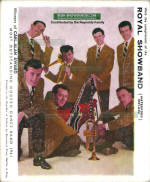
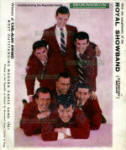
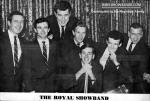
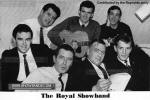
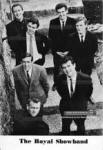
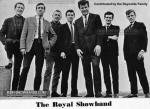
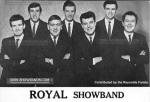
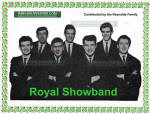
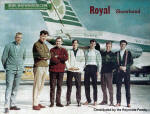
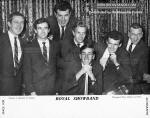
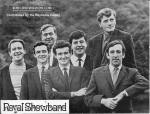
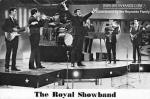
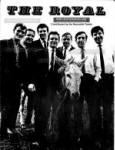
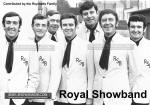
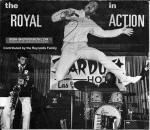
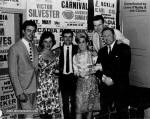
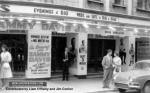
own one in Waterford as well." Early adverts and photos (right)
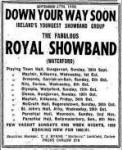
listed them as the "Royal Show Band" and like everyone else, they
had music stands.
Launched in the Fall of 1957,
Jim came up with the name, Royal, from a local theatre, "at the
time, I felt that the band needed a name that would command respect.
So, I used the Royal (from the Theatre Royal) because it suggested
royalty (a stretch of course) and because Ireland had its own
royalty long before our neighbors across the Irish sea. It had no
connotation of the Empire. I reversed the words Band Show (the
Clipper Carlton used it at times) and (eventually) joined the words into
Showband. Tempo, acknowledged it as a "brainwave". All I can say is
that it looked great on the Stardust Hotel sign on the Strip in Las
Vegas later on. I had to clear the name with the Theatre Royal in
Dublin at the time. They had no objections. Of course, we had our
own one in Waterford as well." Early adverts and photos (right)
listed them as the "Royal Show Band" and like everyone else, they
had music stands.
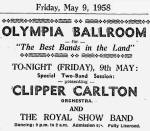
The first gig we can find advertised for the
band was in September 27th, 1957 as the Royal Show Band in the
Arundel Ballroom, Waterford. On May 9th, 1958 (see below) when they
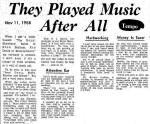
were part of a two session with their idols, the Clipper Carlton. We found an interesting piece in the Tempo column of
the Evening Herald from November 1958 where T.J. Byrne asked Michael
Ryan (the column's writer) to come along and see the band and help
them decide if they should turn professional. In describing what he
heard, Michael commented on the band like this: "Not to be unkind
about it, this is just another showband: not as bad as some, not as
good as others. Honest, hard working lads bent on giving
satisfaction. It could become a competent little band in time." Not
the best endorsement of the band that would go on to define the era
for so many. He went on to say that Mr. Byrne "feels the boys should
finish their apprenticeships. I think he's right."
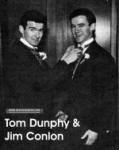
In April, 1958 Tom Dunphy's engagement was
reported in the Munster Express where he was described as "a
member of the clerical staff of the National Board and Paper Mills
Ltd., Granagh" as well as "vocalist cum bass in the Waterford Royal
Show Band."
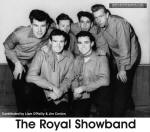
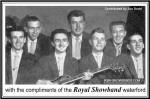
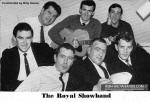
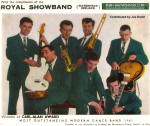
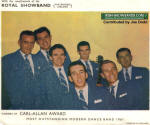
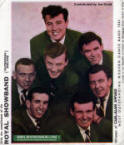
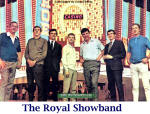
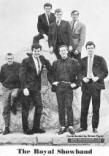
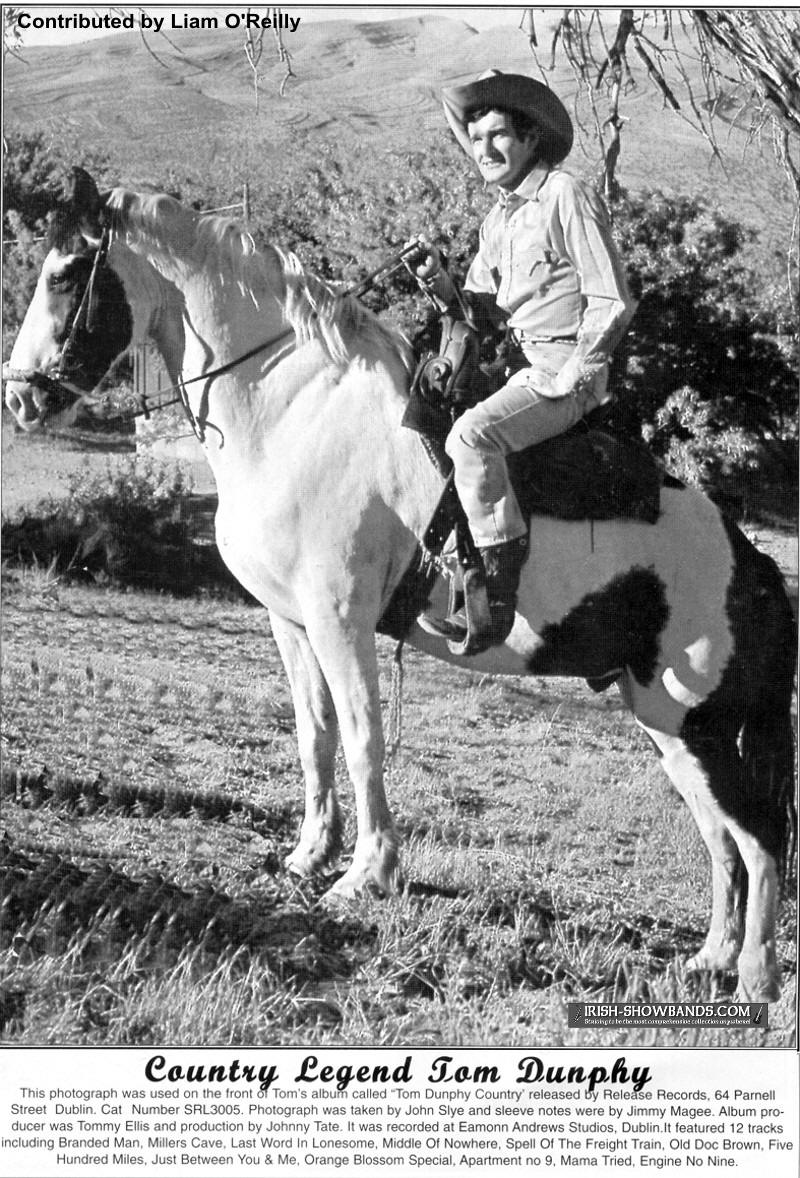
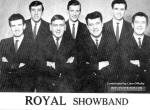
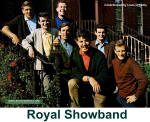
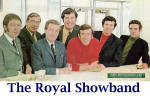
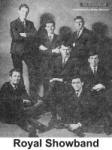
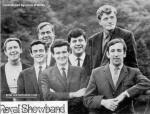
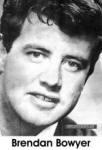
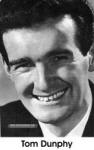
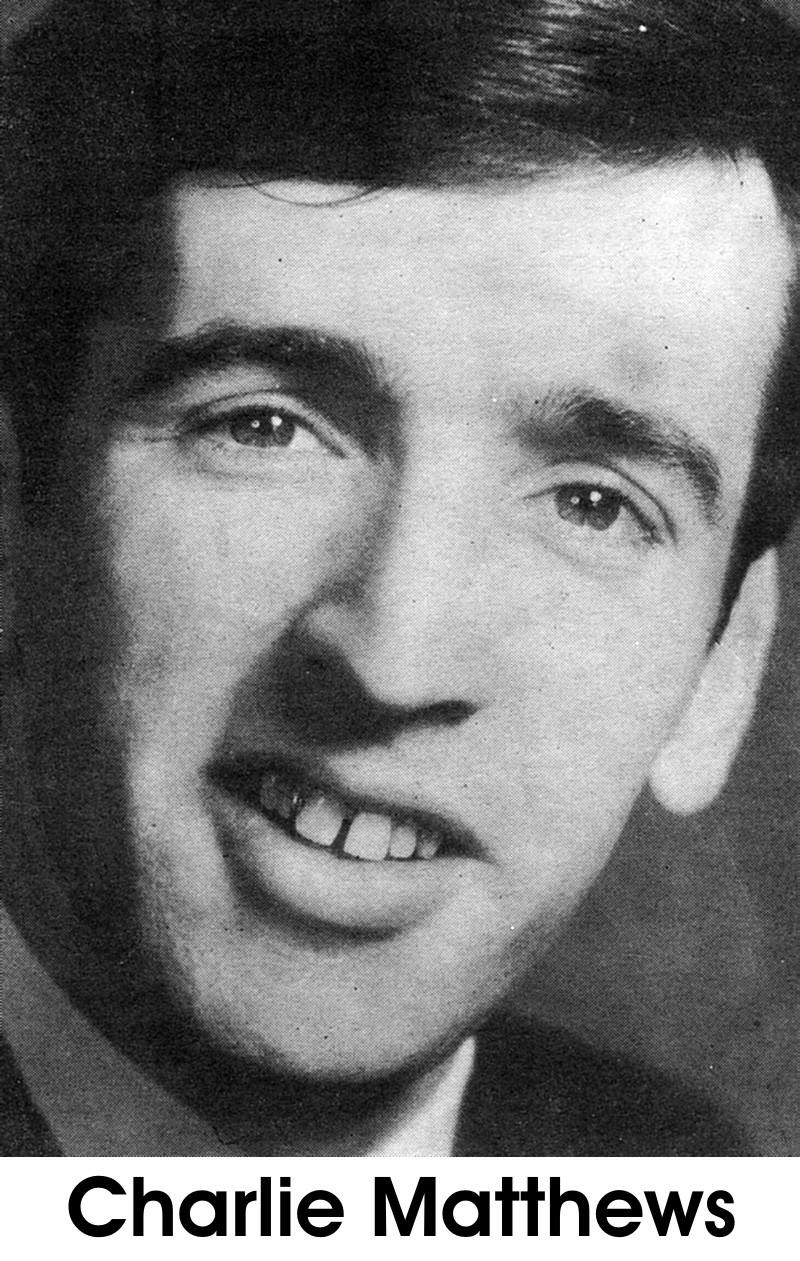
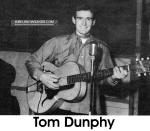
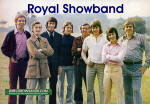
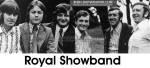
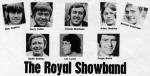
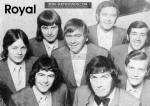
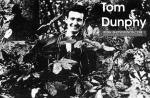
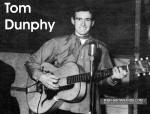
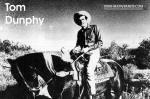
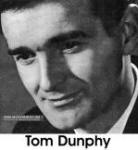
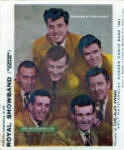
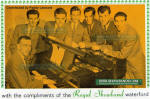
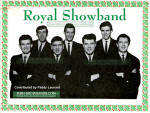
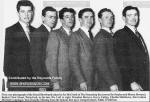
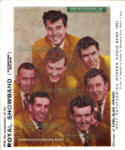
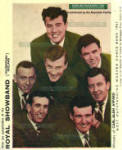
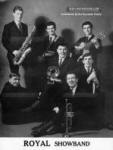
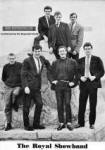
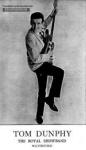
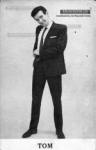
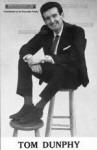
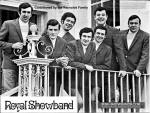
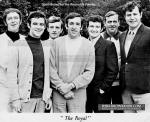
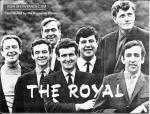
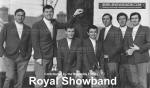
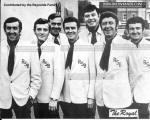
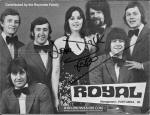
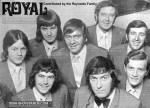
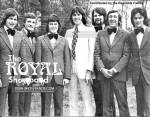
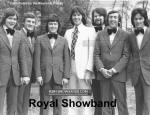
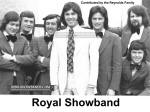
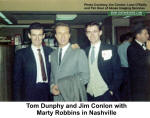
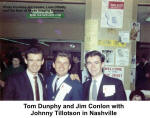
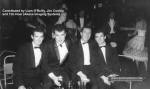
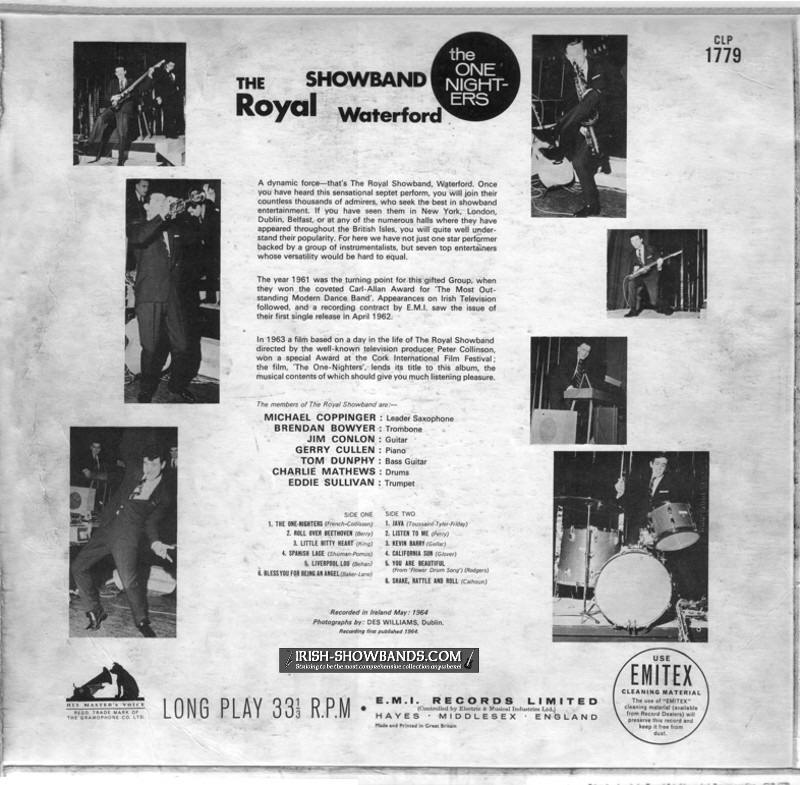
The original lineup included:
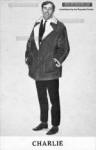
Brendan Bowyer (trombone), Michael Coppinger (sax), Jim Conlon
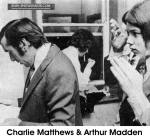
(guitar), Tom Dunphy (bass), Gerry Cullen (keyboards), and Charlie
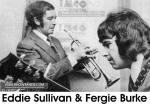
Matthews (drums). Eddie Sullivan (trumpet) would join the band in
early 1958. However, so uncertain were the band about their future
that Jim Conlon took 18 months off in 1959 and 1960 to study accountancy.
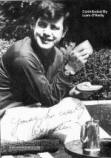
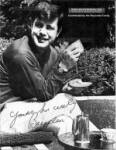
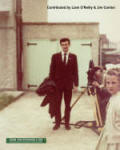
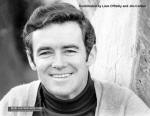
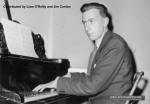
In the meantime Mickey
Gilligan (pictured below who would eventually join The Blue Aces) stepped in on guitar.
Other than this one change, the lineup would remain the same for the next
13 years. Originally, the band had no front man...several members
sang different styles of songs as was the tradition in the early showbands. However, it wasn't long before Brendan's talent took
center stage and he became the band's main attraction, even
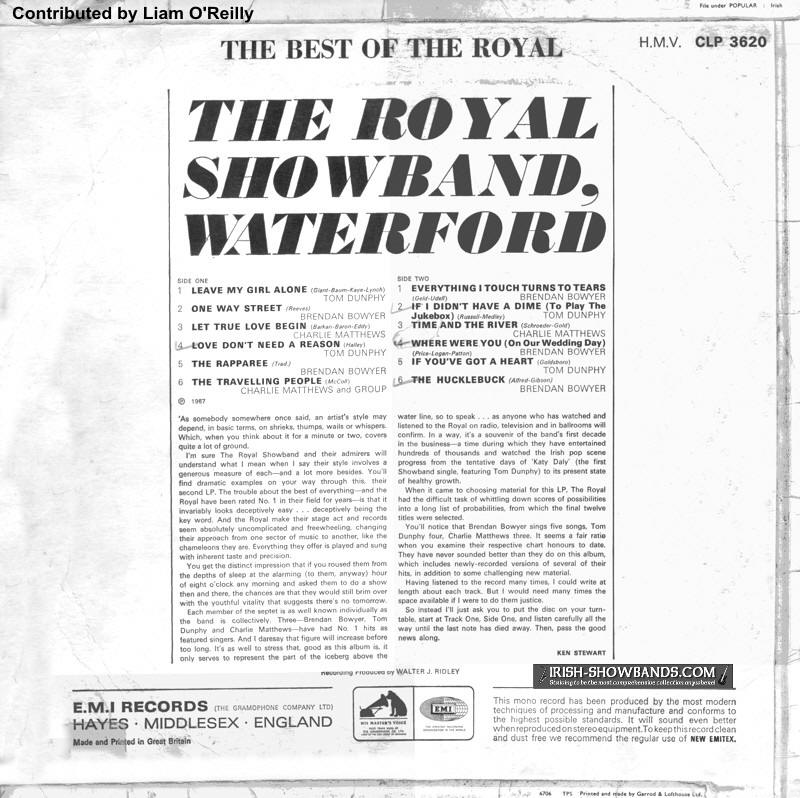
though they would be the only showband to have number one singles
recorded with four different band members on lead vocals.
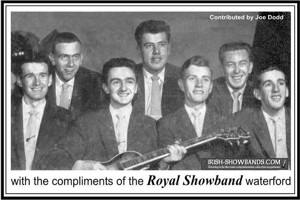 Meanwhile, T.J. Byrne
had been working for Cotts of Kilcock (in Kildare) selling musical
instruments among other things. Jim bought his first guitar from
them on hire-purchase (HP) and T.J. became interested in Jim and his
band. He heard Jim had a group in Waterford and Jim I invited him to
hear the band rehearse. T.J. eventually offered himself up as their
manager, but took no pay until they started to get some dates in
1957.
Meanwhile, T.J. Byrne
had been working for Cotts of Kilcock (in Kildare) selling musical
instruments among other things. Jim bought his first guitar from
them on hire-purchase (HP) and T.J. became interested in Jim and his
band. He heard Jim had a group in Waterford and Jim I invited him to
hear the band rehearse. T.J. eventually offered himself up as their
manager, but took no pay until they started to get some dates in
1957.
All the musicians had day jobs and
could only play at the weekends. It wasn't until Easter, 1959, that
the band turned professional, and never looked back. By mid 1959,
the band had enjoyed what was called by many a "meteoric" rise in
popularity, but bands like the Clipper Carlton, Mick Delahunty and
Maurice Mulcahy still enjoyed top billing. In these early years the
band were advertised as the "youngest showband in Ireland" (a title
which would be claimed by many new bands over the years).
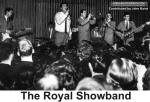
Over the next
few years, the band's talent and showmanship (especially the young
Brendan Bowyer), augmented by Byrne's
astute promotion, coincided with the rise of popularity of the
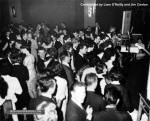
ballrooms across the country and by the early 1960's, the band was playing for
huge money almost every night of the week. Eventually likened to Ireland's
version of the Beatles, the Royal Showband had arrived.
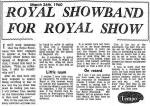
In March, 1960, it was reported in the
Evening Herald that the band was invited to appear
at the Royal Variety Show before the Queen of England. There was
even an advert for their dance on May 15th (the night before the
Royal Variety Show) that they were the "The Only Irish Band Ever
Chosen to Appear at the Royal Command Variety Performance. It gained
some publicity for them in the press, but as far as we can tell, it
never happened. The 1960 performance would be the night Sammy Davis
Jr. stole the show, but there was no mention of the Royal Showband.
Still, they were packing in crowds across Britain, mostly at the
Irish clubs. The
era of the Irish Showbands was at hand.
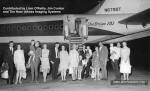
The lack of
dance dates during Lent in Ireland also helped the band, who used
the time to tour Britain and the United States, creating even more
excitement. The Royal made their first trip to the States in 1960,
invited by Bill Fuller, who brought all the bands to the East Coast
in those days.
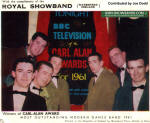
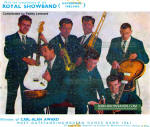
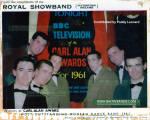
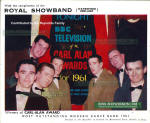
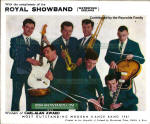
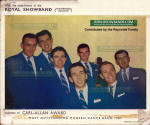
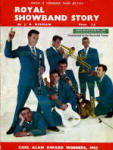
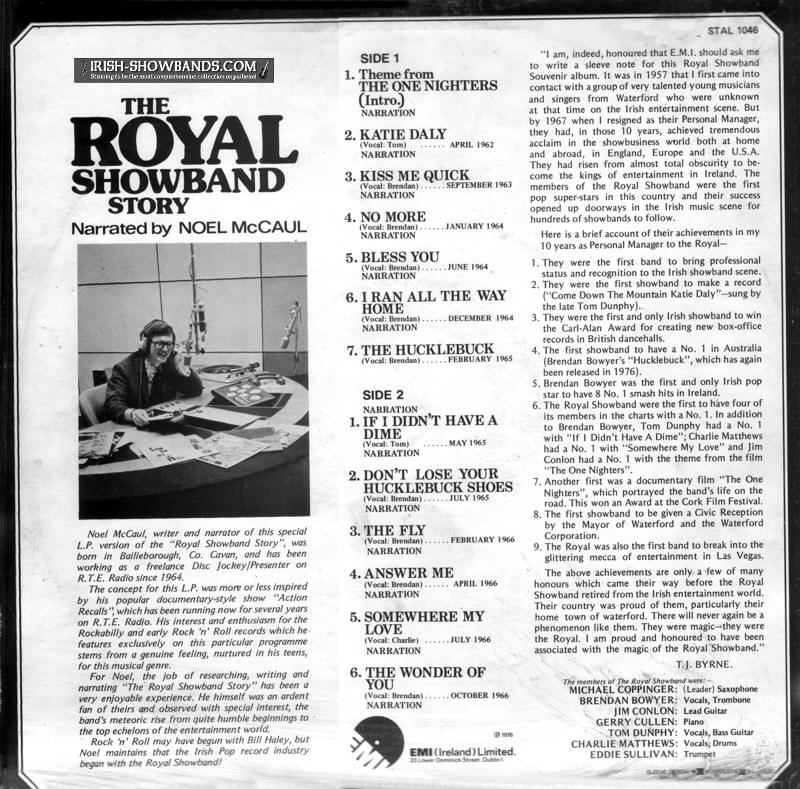
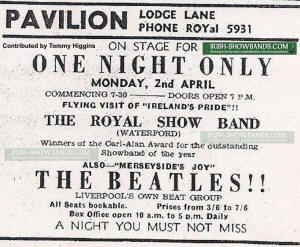 In 1961, they won Britain's Carl-Alan Award for
box office achievements as "Most Outstanding Modern Dance Band" of
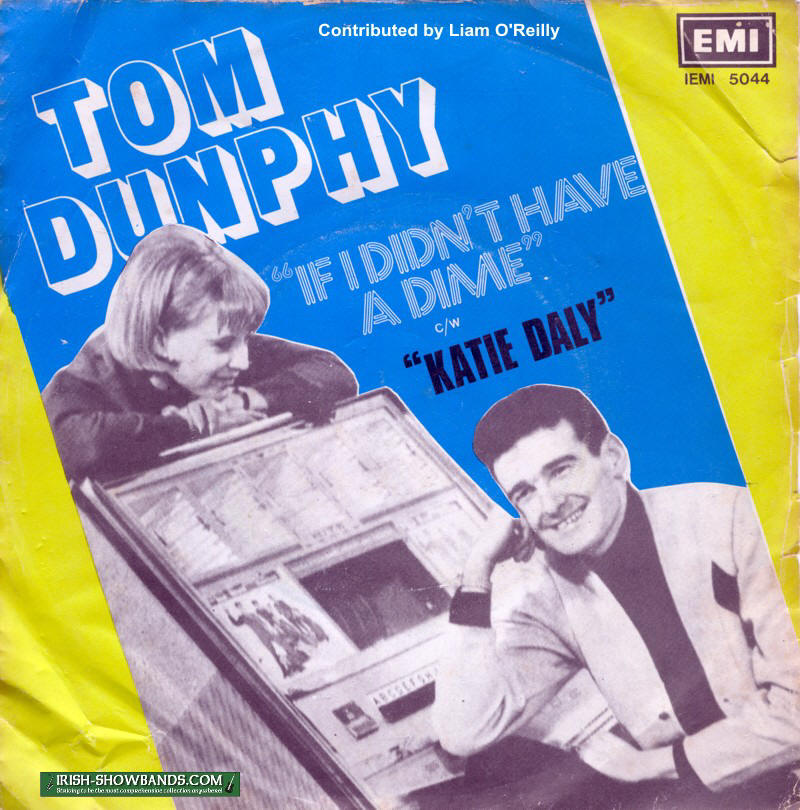
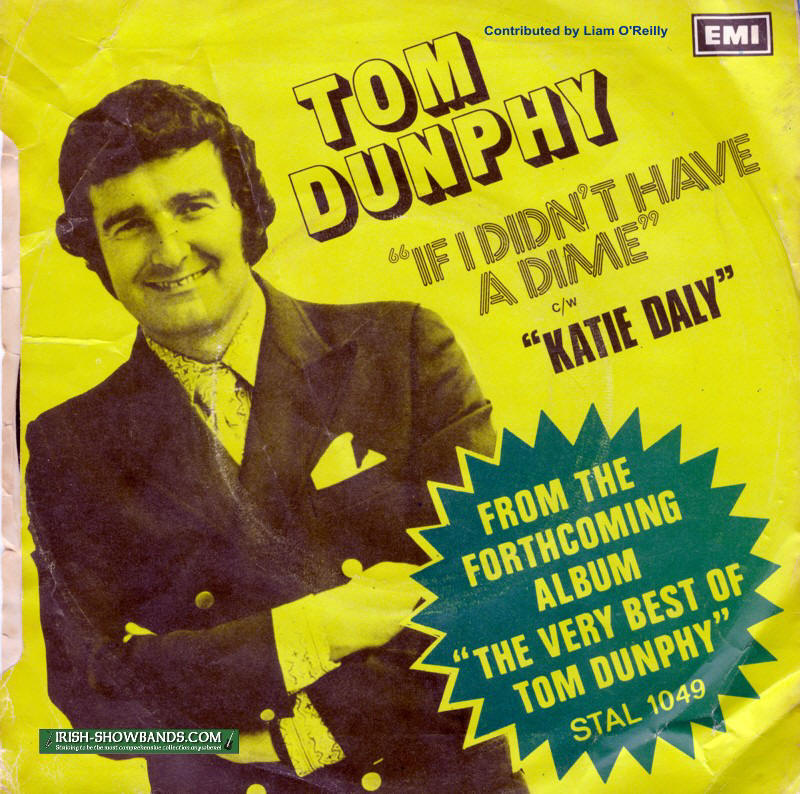
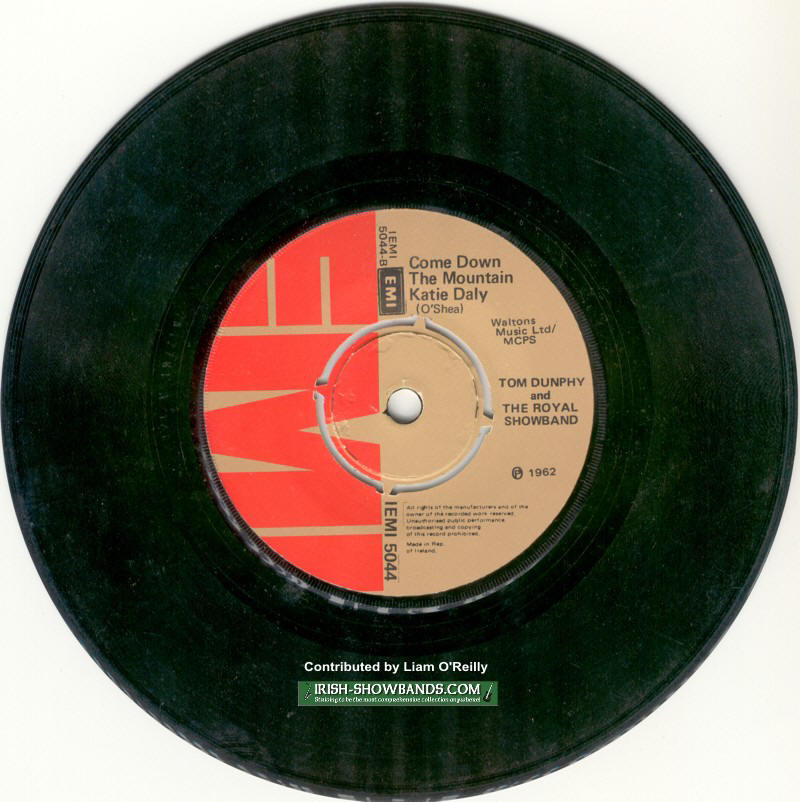
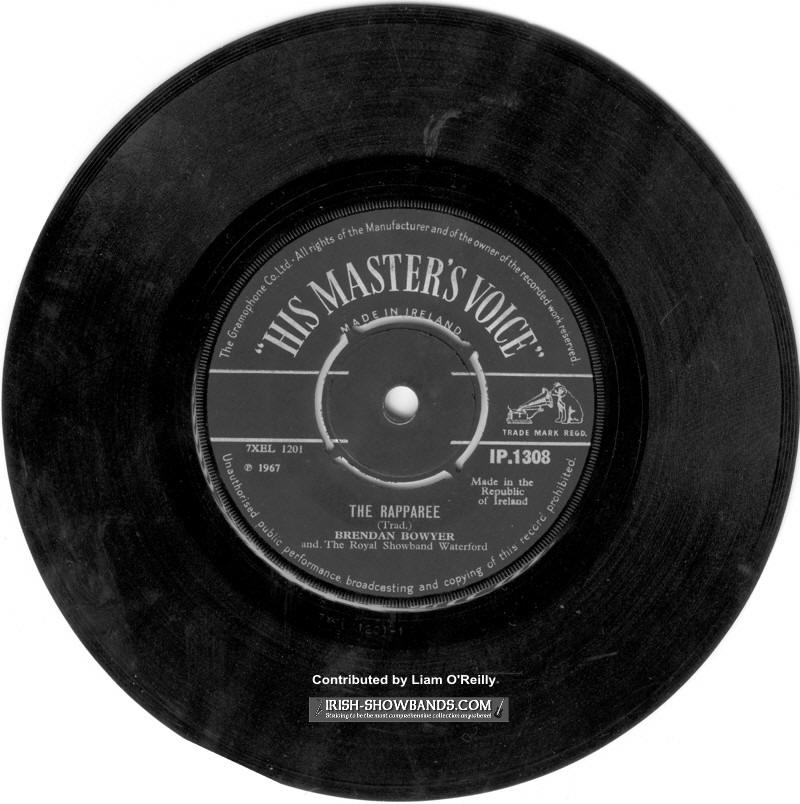
the year. In May, 1962, they released the first record ever by an Irish
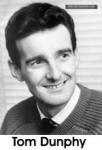
showband, Come Down the Mountain Katy Daly, sung by the late Tom
Dunphy. However, the song had been released on Walton's Glenside
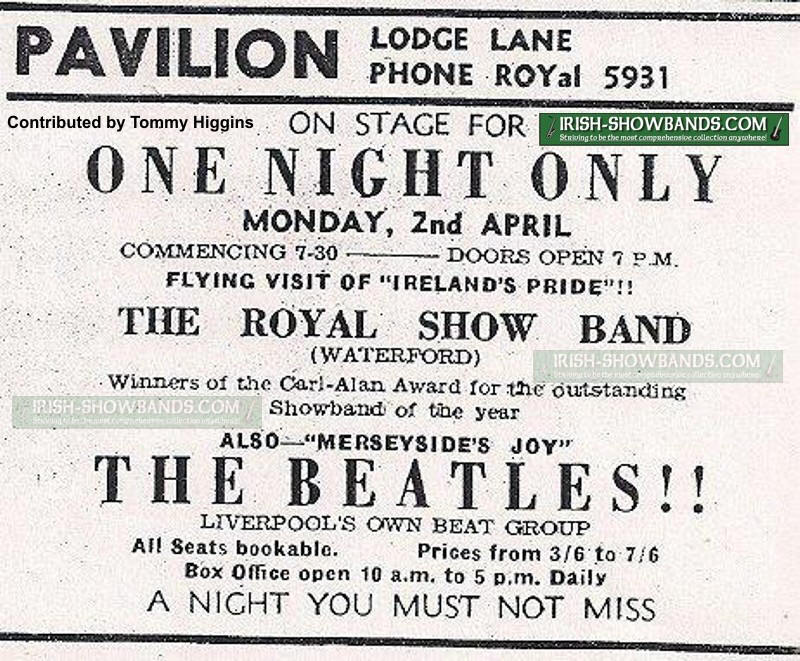
label in November, 1961 as sung by Eamon O'Shea, who wrote the song. In April of the same year, the band played the Pavilion
Theatre on Lodge Lane in Liverpool with a little known support group
(at the time) The Beatles, they still had Pete Best in the lineup.
In 1961, they won Britain's Carl-Alan Award for
box office achievements as "Most Outstanding Modern Dance Band" of
the year. In May, 1962, they released the first record ever by an Irish
showband, Come Down the Mountain Katy Daly, sung by the late Tom
Dunphy. However, the song had been released on Walton's Glenside
label in November, 1961 as sung by Eamon O'Shea, who wrote the song. In April of the same year, the band played the Pavilion
Theatre on Lodge Lane in Liverpool with a little known support group
(at the time) The Beatles, they still had Pete Best in the lineup.
However, nothing was to prepare the band for the magic that
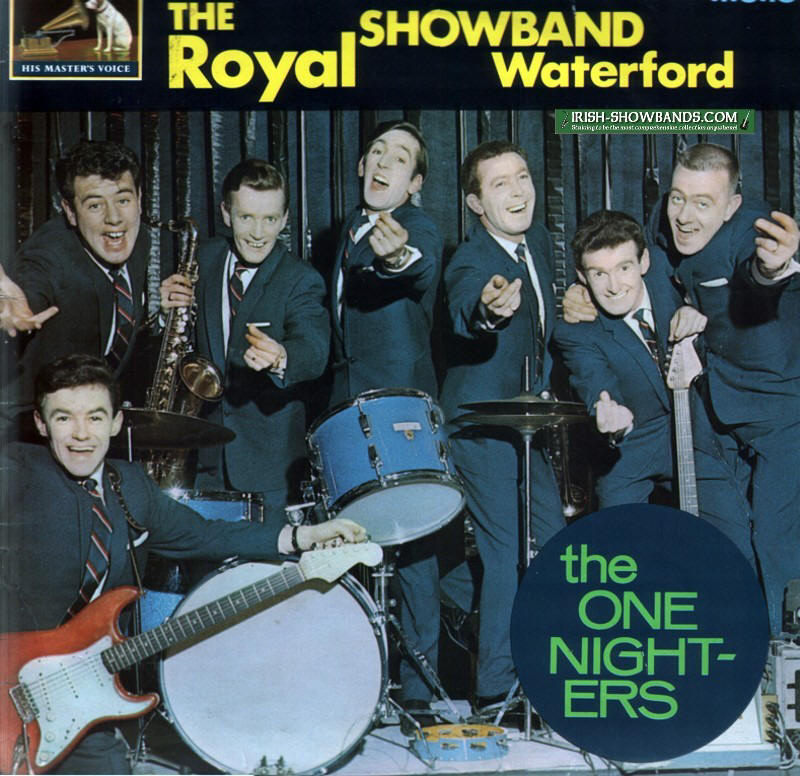
was 1963. That year, Brendan recorded Kiss Me Quick, which was to
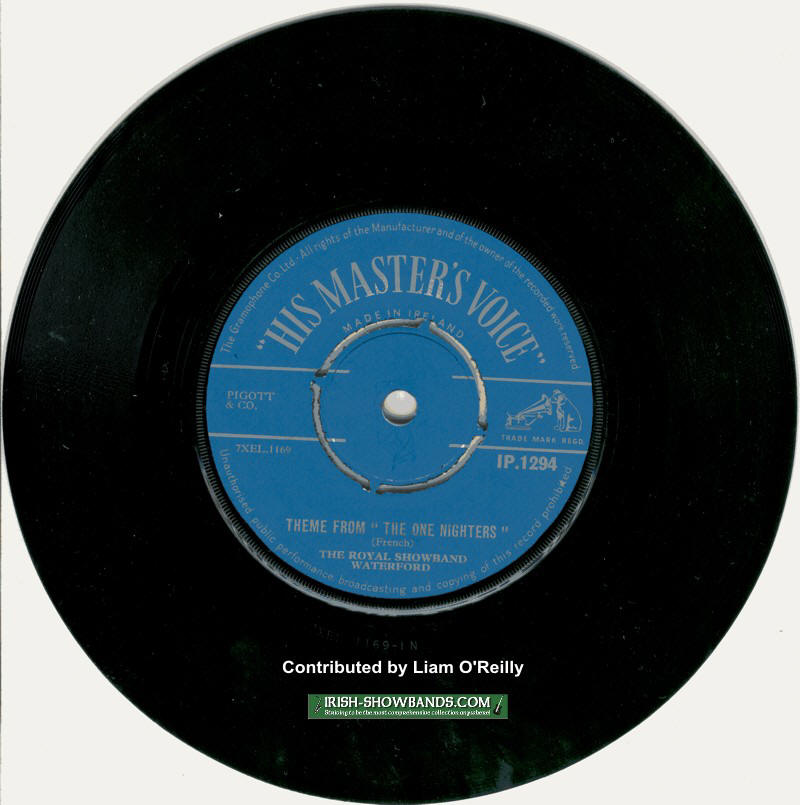
become the first number one single (of many) by a showband. They also starred
in the film, The One Nighters, which was produced by Peter
Collinson and followed the band through their "wholesome" private
lives and onto the stage. In 1963, no other band in Ireland could
touch the success enjoyed by Brendan, Tom and the rest of the Royal
Showband.
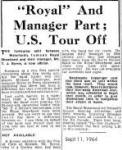
In September, 1964, the entertainment scene was
rocked by the news that T.J. Byrne and the Royal had parted company
on the eve of their first major tour of America (see below). The
rift between the band and their manager led to all kinds of rumours
that the band was actually breaking up, but just 10 weeks later,
things had been sorted out and in early November T.J. and the Royal
had signed a new "long term contract."
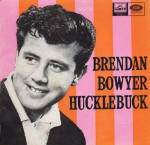
By
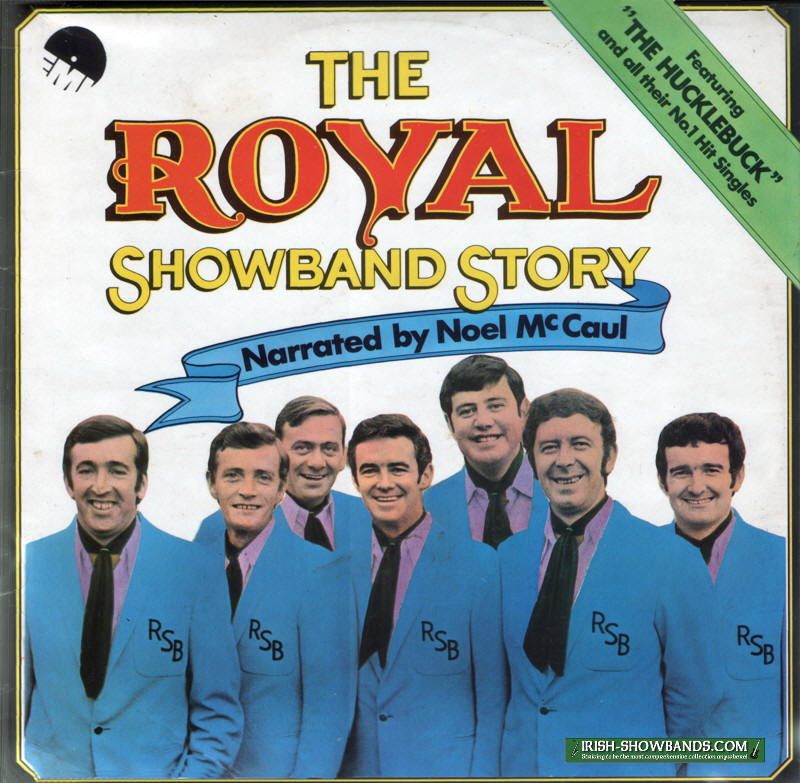
the time 1965 rolled around, the band had achieved almost everything
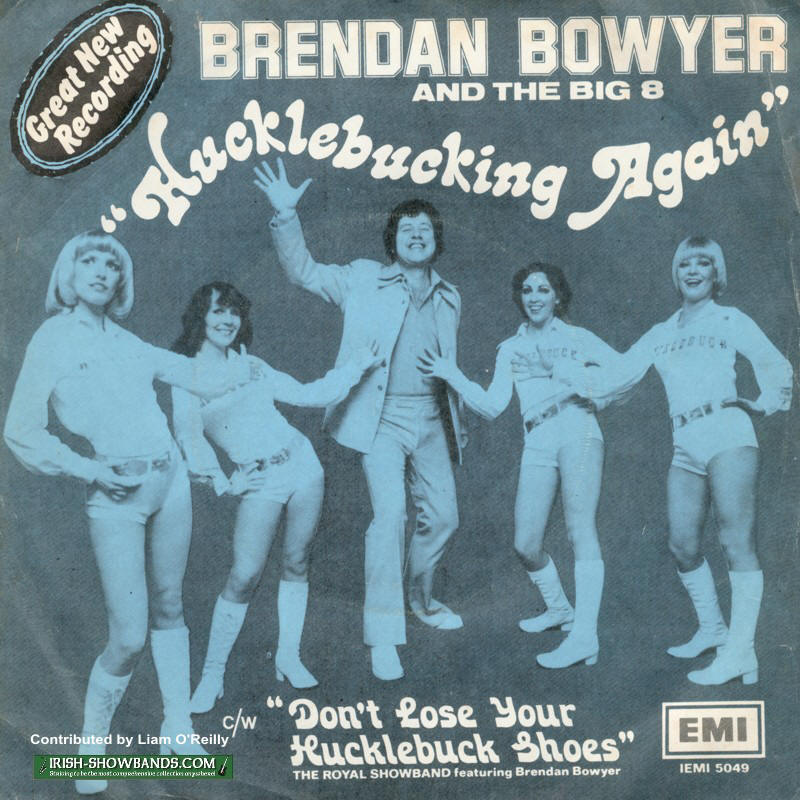
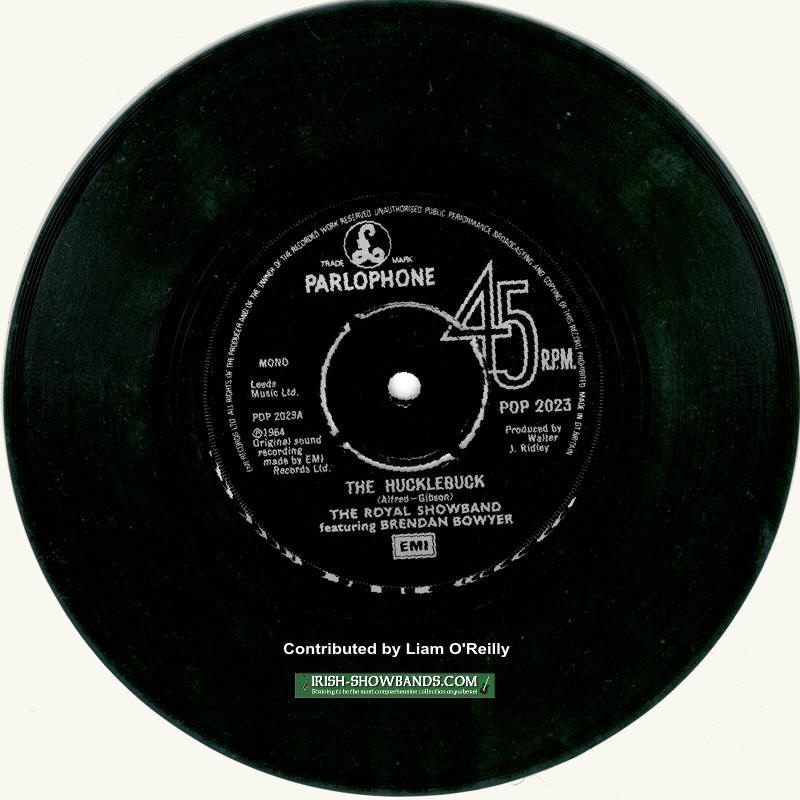
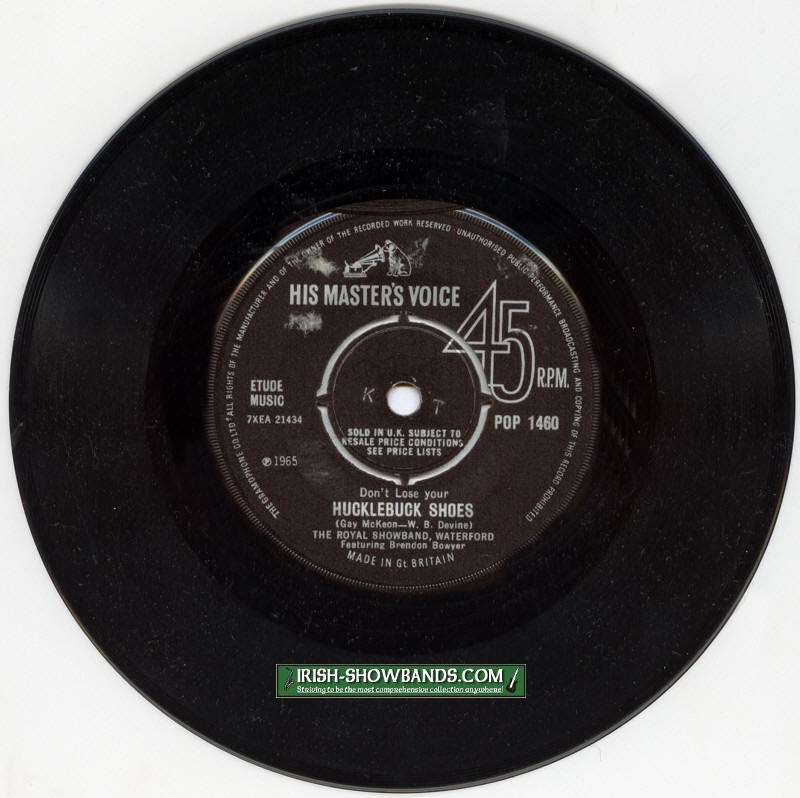
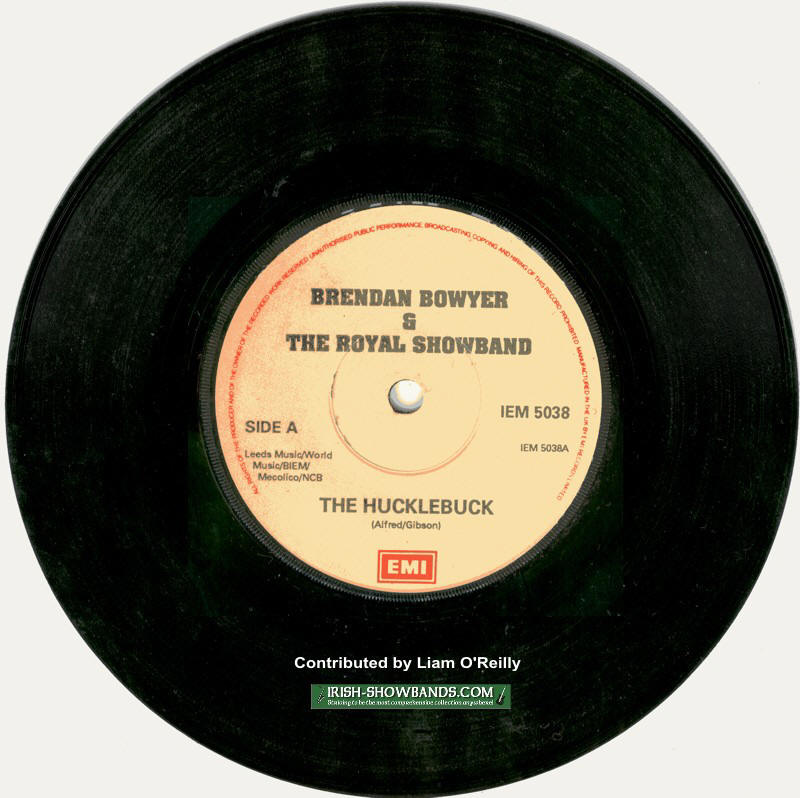
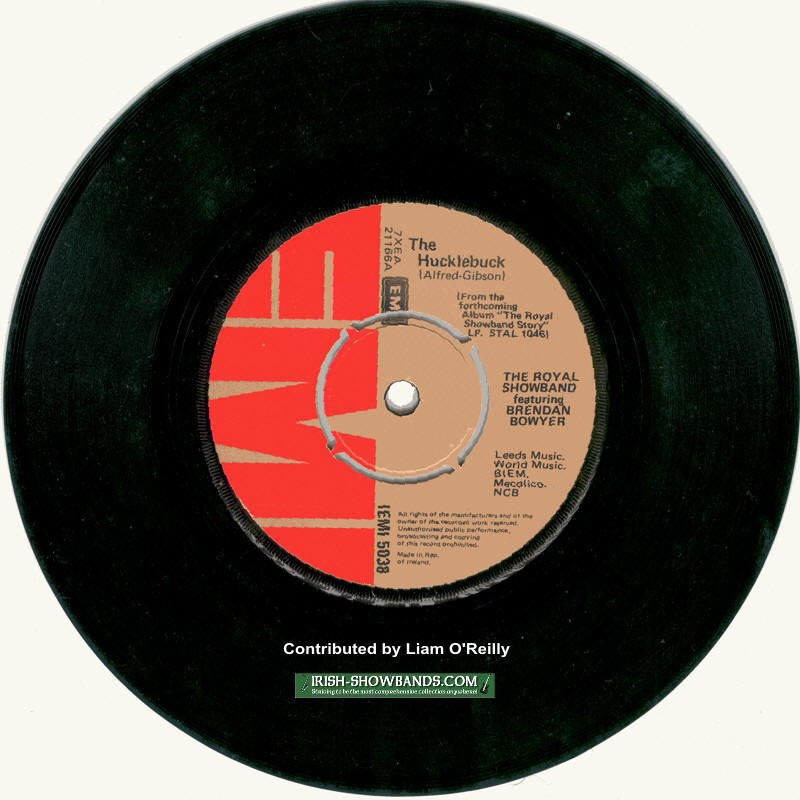
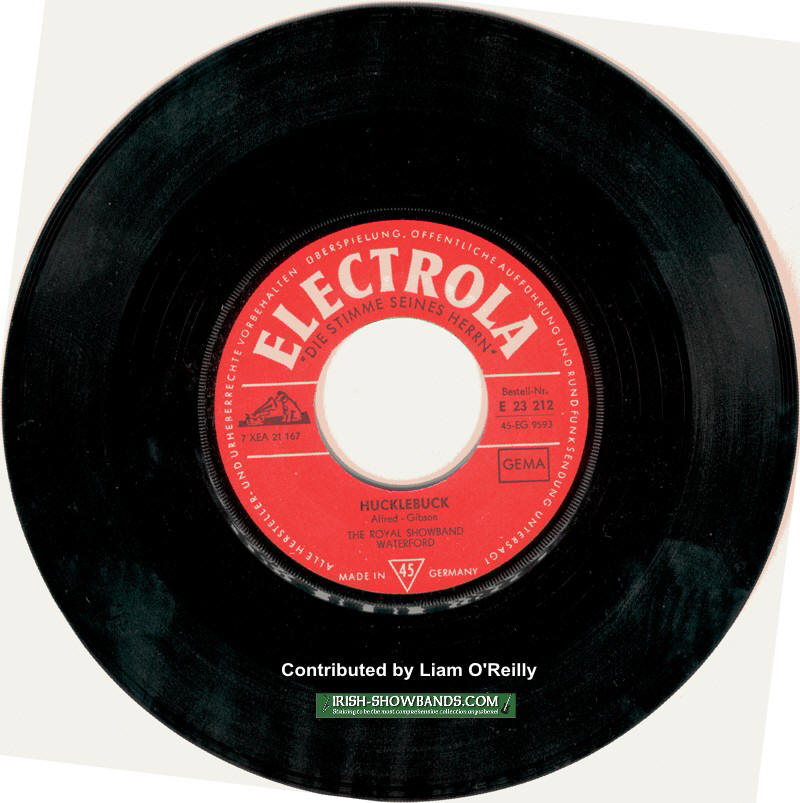
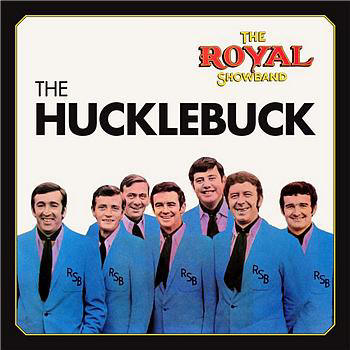
possible. That year, they released a single called I Ran
All The Way Home, the B-side was a little R&B number from the
late 1940's called The Hucklebuck which had been made into a
minor U.S. hit by Chubby Checker in 1960. Once the band realized the
potential for the song, it was made the A-side and reached Number 1
in the Irish charts, staying on the charts for 12 weeks. It even
charted in England as well. The song would chart again in 1976 and
has become the song most associated with the showband era by many
people, due to its enduring popularity even though it came
relatively late in the peak of the showband era.
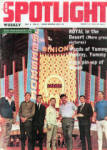
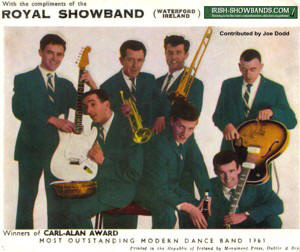 As the sixties
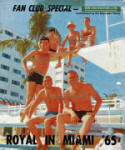
progressed, so too did the band's popularity and earnings. 1966 was
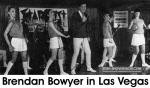
the first year they went to Las Vegas, a destination that was soon
to become too strong a lure for Brendan and the boys. They played for
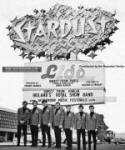
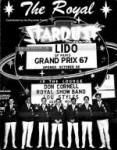
four weeks at the Desert Inn. The following year, they would play
the Stardust Hotel on the strip.
As the sixties
progressed, so too did the band's popularity and earnings. 1966 was
the first year they went to Las Vegas, a destination that was soon
to become too strong a lure for Brendan and the boys. They played for
four weeks at the Desert Inn. The following year, they would play
the Stardust Hotel on the strip.
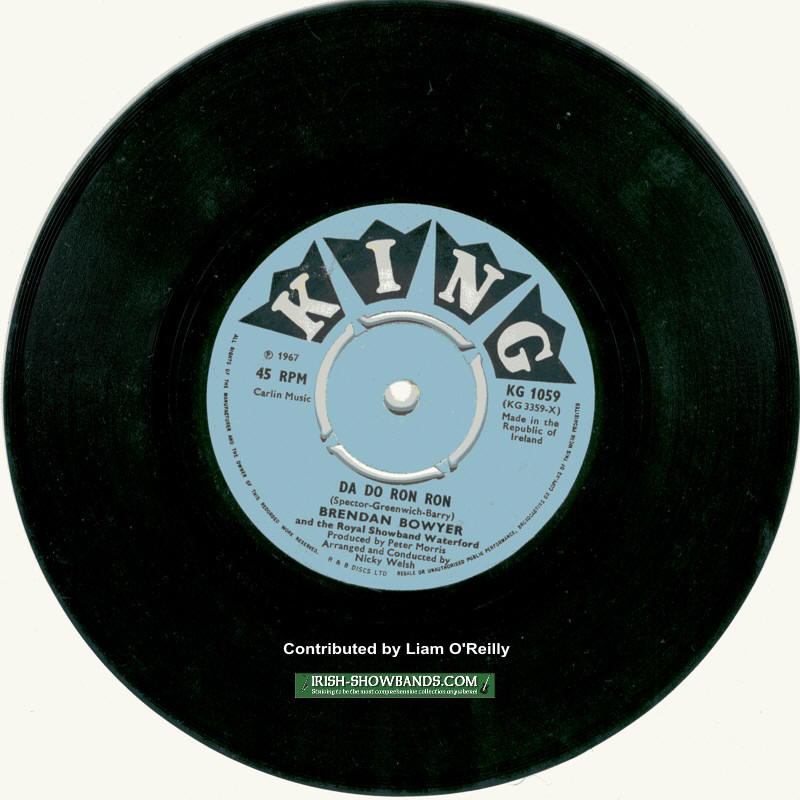
That same year, 1967, the Irish
entertainment industry was once again stunned when T.J. Byrne announced he was
giving up managing the band, a shock that was comparable to Big Tom
leaving the Mainliners, Dickie Rock departing from the Miami, or a
few years later when Brendan quit the Royal! By the way, all of
which actually happened within a couple of years. This time, there
would be no reconciliation.
Connie
Lynch, who was already managing Pat Lynch and the Airchords, stepped
in as the new manager and from then on, they divided their time
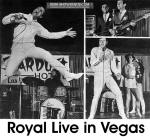
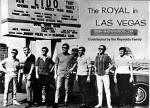
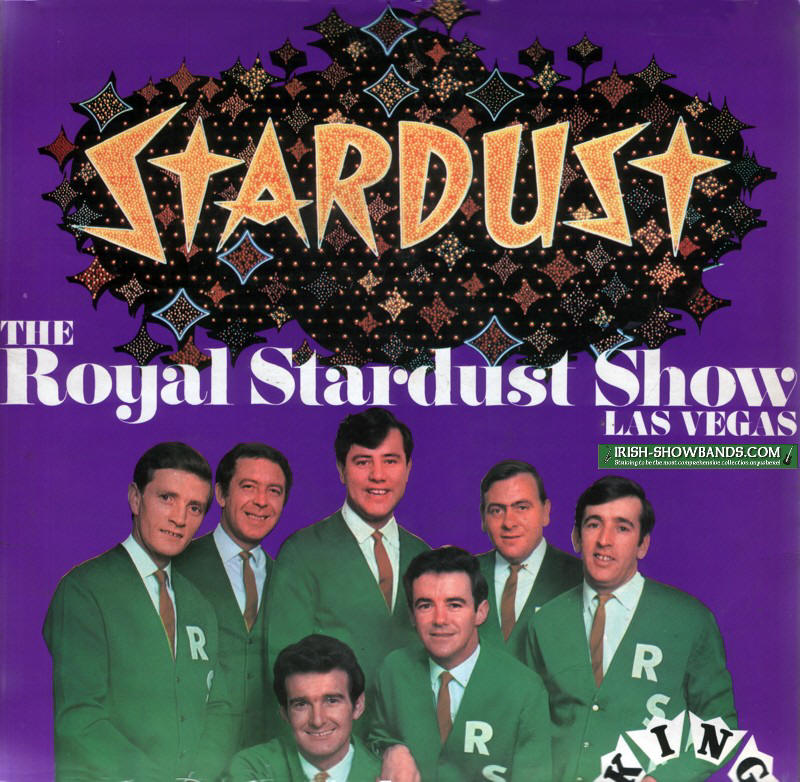
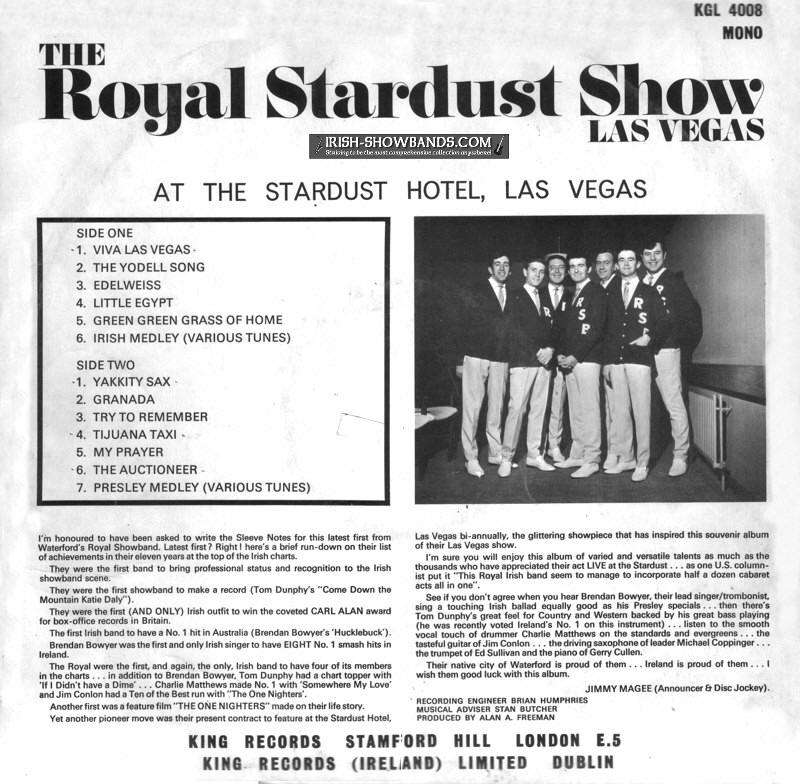
between Ireland and Las Vegas. In 1967 they signed a five year deal to appear
in the Stardust in Vegas which was reported to be worth in excess
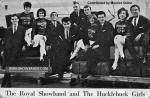
of $250,000 for two eight week stints a year. The band took four
girl dancers with them as well - Rita Holohan, Angela Larney, Jessie
Fagan and Pauline Barry.
Later, they
would generally go to the States
between Christmas and July, missing the Irish winter. The fact that
they were gone for nearly six months, made them an even hotter commodity
when they returned home to the summer ballroom circuit.
In
1970, the seeds of change were sown when Tribune Records management tried to lure Brendan away from the Royal. In October,
a pair of articles in Spotlight reporting that not only was Brendan
considering leaving the Royal, and apparently Tom Dunphy was also
approached to start a new country band. At one point it was reported
that Brendan had accepted the offer and was leaving the band, but
last minute meetings with the Royal convinced Brendan (and Tom) to
stay. The following week,
it was reported that both Brendan and Tom would be staying. However,
in the January 4th, 1971 issue of Spotlight, the Royal were
in the news again as it was reported that the Tribune Organization
had failed in getting the High Court to issue an injunction which
would prohibit Brendan singing with the Royal. The Tribune group
claimed that he actually had signed a contract, but later changed
his mind. A hearing was scheduled for January 12th. From what we can
gather, Brendan never sang with the Royal in an Irish ballroom again
as they left for Vegas January 4th.
 It was only a matter of
seven months before Brendan and
Tom were gone. The original Royal Showband played it's last
gig on July 29, 1971 in the Stardust Hotel in Las Vegas. Their fans
in Ireland wouldn't learn of the break up until August 5th. Jim
Conlon, the band's original guitarist (and a Certified Public
Accountant) decided to retire from show business. Jim cited a lack
of a home life, financial matters within the band and concern over
his own health among his reasons for leaving the band.
It was only a matter of
seven months before Brendan and
Tom were gone. The original Royal Showband played it's last
gig on July 29, 1971 in the Stardust Hotel in Las Vegas. Their fans
in Ireland wouldn't learn of the break up until August 5th. Jim
Conlon, the band's original guitarist (and a Certified Public
Accountant) decided to retire from show business. Jim cited a lack
of a home life, financial matters within the band and concern over
his own health among his reasons for leaving the band.
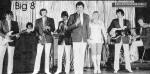
Shortly
thereafter, Brendan and Tom announced the formation of
The Big 8, along with former
member of the Capitol, sax player Paddy Cole as bandleader. The band also enlisted Twink
(of Maxi, Dick and Twink) on vocals, Dave Coady of The Real McCoy on trumpet, Mickey
O'Neill of The Times on drums, Johnny McEvoy's Michael Keane on
keyboards and ex-Stranger, Jimmy Conway on guitar. The Big 8
took Las Vegas by storm, playing for five years in the Stardust
until 1975. The split in the band did create some legal problems as
it was the Royal who had contracts in Vegas, while Brendan and Tom
were the main stars of the show.
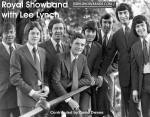
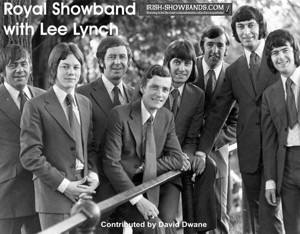
Back home, the
shattered Royal had to fill the three gaping holes left by the departure of Bowyer, Dunphy
and Conlon. Several members of the Airchords, Arthur Madden
(keyboards), Billy
Hopkins (brother of drummer Des Hopkins) on bass and Fergie Burke
(guitar) were joined by Lee Lynch on lead vocals. Lee, from
Ballinasloe, had previously been singing in London with his own
group, The Blue Angels. Lee had left Ireland for England in 1959,
returning in 1964, but only stayed a few months before returning to
the UK. Lee and the "New" Royal hit the road playing their
first gig in the Majestic Ballroom, Mallow on September 3rd, 1971.
However, only
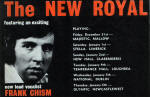
four months later, they had to make a change: Lee
Lynch was gone and soon-to-be Elvis impersonator Frank Chisum was the new lead
vocalist, making his debut on St. Stephen's Night, (December 26th)
1971 in the Dreamland Ballroom, Athy. Frank had previously been with
the Omagh group, Pebbles. Another big change in the lineup was the
loss of original member, Gerry Cullen who left the band, and show
business.
However, this version of the "New Royal" would not last long
either as in March, 1972 band manager Connie Lynch (who had taken
over from T.J. Byrne five years earlier) announced he was
leaving the band and taking Frank with him and they were going to
start a new band. Said Connie, "I am leaving the Royal because I
can't see any future in the band without Brendan Bowyer and Tom
Dunphy. Both these boys have proved what great artists they are and
I think it is just pointless trying to carry on the Royal without
them. They would form the Top Seven Showband which would hit the
road on Easter Sunday, 1971, but be gone off the road by November
1972 with Frank going back to the local Omagh cabaret scene with a
trio called Fashion.
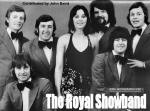
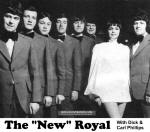
Meanwhile, the
band was taken over by Greg Hughes and in April Frank
was replaced by Carl Phillips, a Dublin cabaret singer who had
been with the Actions Showband and also done some theatre in the city. By this time both Eddie Sullivan had left the band leaving only Charlie Matthews
and Michael Coppinger from the original lineup. There would be
trouble when Carl (real name Phillip Carroll) was brought to court
by the Actions manager, James Kierans for breach of contract.
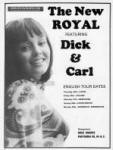
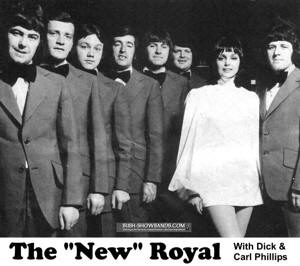 In
May, 1972 they added Barbara Dickson, better known as Dick from the
girl group Maxi, Dick and Twink. By coincidence, Twink had joined
Brendan and Tom in The Big Eight the year before and Barbara would
also end up with the Big Eight some time later! The "New" New Royal hit the road
in May, 1972 with a short English tour, and then came home to
Ireland in the first week of June, playing their first gig in
Johnstown on June 2nd.
In
May, 1972 they added Barbara Dickson, better known as Dick from the
girl group Maxi, Dick and Twink. By coincidence, Twink had joined
Brendan and Tom in The Big Eight the year before and Barbara would
also end up with the Big Eight some time later! The "New" New Royal hit the road
in May, 1972 with a short English tour, and then came home to
Ireland in the first week of June, playing their first gig in
Johnstown on June 2nd.
Although the
duo were heralded by manager, Greg Hughes, as "tremendous
singing talents...and just what the band needed to get them back to
the big time," it was not to be. Less than five months later,
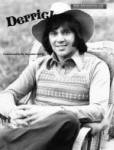
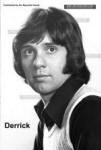
Carl was gone and he was replaced by the former front man of The
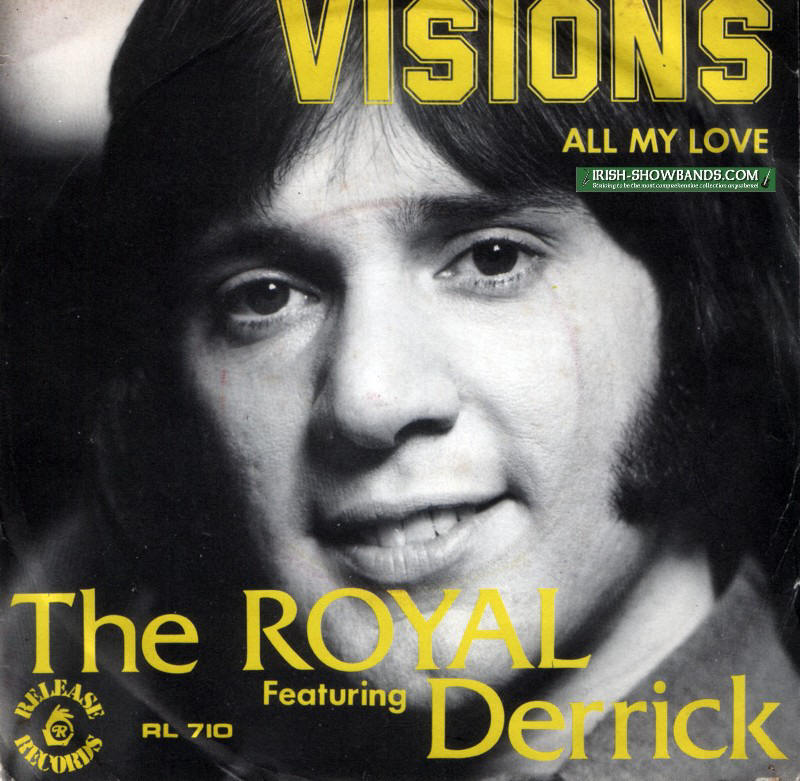
Sounds, Derrick Mehaffey.
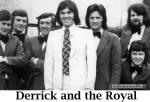
In September,
1972, Derrick, who had emigrated to Canada
after previously being with the Sounds, and had been singing with the resident band in Toronto's Maple Leaf
Ballroom,
returned to take over from the front spot. Within a few months of him
joining, Dick announced she was leaving the band.
Despite the
addition of Derrick to their lineup, the summer of
1973 saw crowds for the Royal steadily dwindling while Brendan and the Big 8
managed to generate continued interest in the new band on their annual
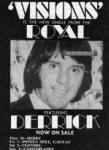
trips home. At the beginning of 1974 the band released a single,
Visions. However, after the New Year Charlie and
Michael
decided to call it quits and the Royal performed its last gig on February
9, 1974 in Bantry, Co. Cork. Strangely enough, though, Julie Boyd
reported in her Spotlight column on April 4, 1974 that Arthur Madden
and Fergie Burke had quit the band. It is possible that Julie was
not aware the band had called it quits as she reported the two
musicians were going into cabaret in the Pig and Whistle in Dublin.
Further to this, a story in the May 2, 1974 issue of Spotlight
stated that Derek Mehaffey was leaving the band as he had grown
tired of traveling.
One way or
another, fifteen years after the band had set records
in ballrooms across the country and set the standards by which
all future showbands would be measured, they were no more.
 At
the same time,
The Big 8
continued to build on their success in America and
returned home to Ireland for a tour every summer. It was during one
of their trips home in 1975 that tragedy struck
the Irish entertainment industry.
At
the same time,
The Big 8
continued to build on their success in America and
returned home to Ireland for a tour every summer. It was during one
of their trips home in 1975 that tragedy struck
the Irish entertainment industry.
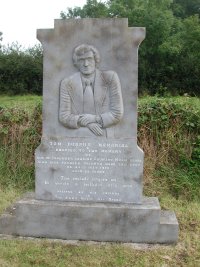
On July 29th,
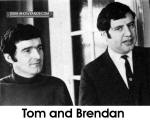
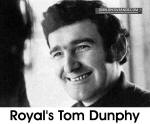
1975, 40-year-old Tom Dunphy
died in a car crash at Drumsna, near Carrick-on-Shannon on his way to a gig
in Donegal. His
passing was one of the truly sad days for fans of the Royal,
The Big 8 and the entire showband era. Two days later, the showband world would be rocked
by the Miami massacre, an event that
would dramatically overshadow Tom's tragic passing.
When the band returned to Las Vegas later that year, they moved to
the Aladdin Hotel where they stayed until 1980. Frankie Carroll of
the Ranchers replaced Tom Dunphy and The Big 8 finally
relocated to Las Vegas on a permanent basis in 1983.
Despite the fact that the band
called it quits in 1975, EMI and HMV released several of their
earlier records which made the charts for a second (and in the case
of the Hucklebuck a third) time.
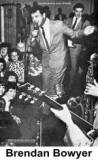
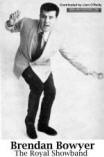
Obviously, Brendan Bowyer's
fame and longevity far surpassed that of the band that brought him
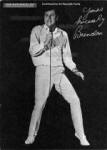
to the forefront of the Irish Showband era. With his gyrating hips,
and exciting performances, he captured the hearts of a generation of
dancers that packed the ballrooms and dance halls of Ireland all
those years ago. One thing is for certain: together they
played a very big part in the rejuvenation of the
Irish music industry and contributed in their own small way to the
economic revival of the country.
T.J. Byrne, the band's manager, sadly passed
away 10th December, 2016. (from Michael Coppinger Jr.)
(Some facts for this page
were referenced from "Send 'Em Home Sweatin" by Vincent Power
and also provided by Jim Conlon, Mickey Gilligan and Liam O'Reilly.)
click on thumbnails for full
size image